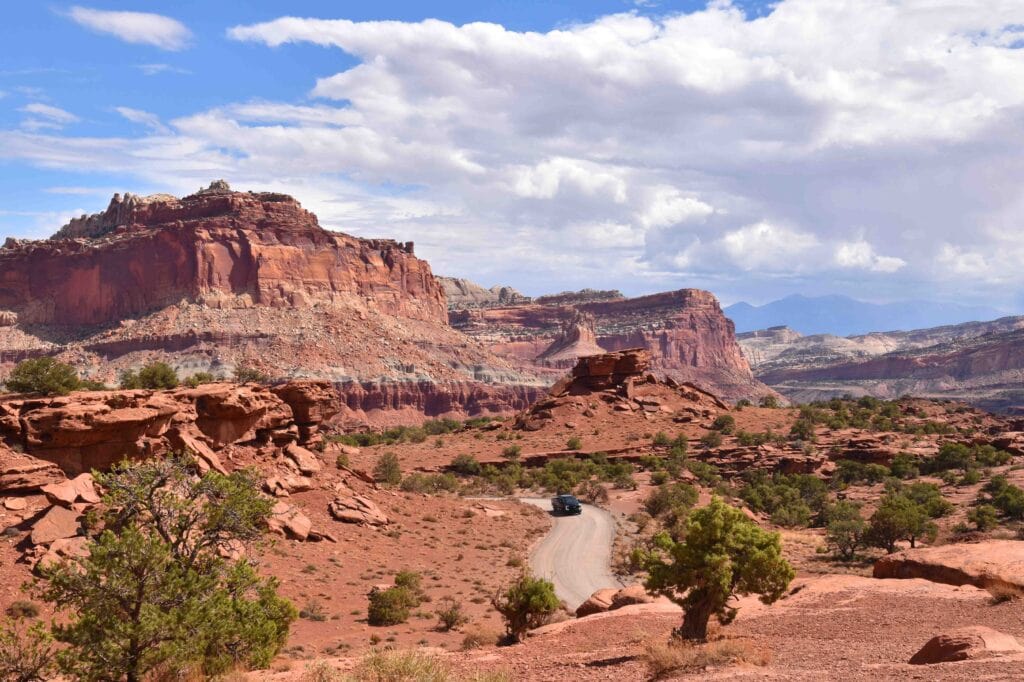
When we rolled into the heart of Capitol Reef National Park, it felt as though the land itself was leaning in to tell us a secret. We were not greeted by crowds or grand entrances, but by a quiet unfolding. Cliffs rose at odd angles, long and deliberate, as if the Earth had paused mid-thought. We stood there together, sensing that this place would not rush us. It would ask us to slow down and pay attention.
Traveling as a couple has taught us that discovery often arrives softly. Here, the landscape did not announce itself all at once. It revealed itself in layers, each turn of the road offering a new angle, a new question. Why did the rock seem to stretch instead of stack? Why did the land feel both vast and intimate at the same time? These were not questions we expected to ask, yet they followed us like good conversation.
As first-time visitors, we are drawn to this park more by curiosity than by certainty. We found ourselves learning alongside the land, realizing that understanding would come gradually. This was not scenery meant to be consumed. It was a story meant to be read slowly, one chapter at a time, with room for wonder between the lines.
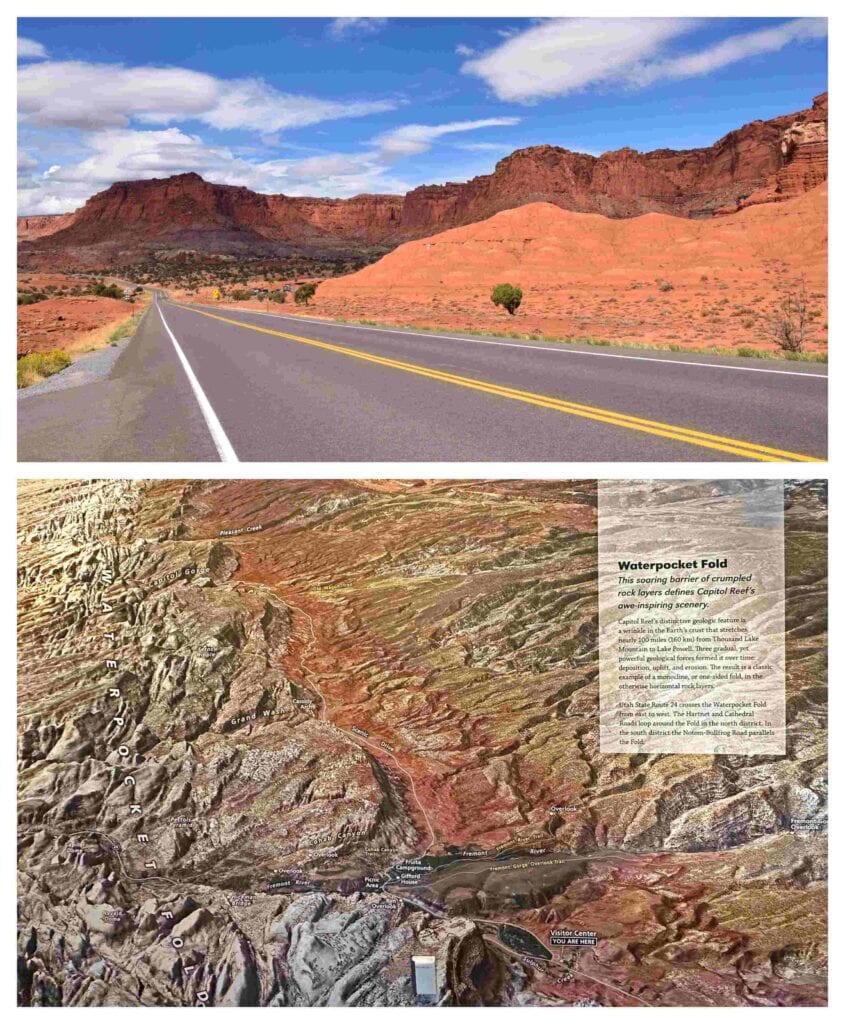
Why the Land Refuses to Lie Flat
As we traveled deeper, the oddity of the landscape became impossible to ignore. This was not a place shaped by simple erosion or random upheaval. Instead, the ground itself seemed to ripple. We learned that we were moving alongside a massive fold in the Earth’s crust. It is a long warp created millions of years ago by ancient tectonic forces that pressed sideways rather than straight down.
This fold, stretching for nearly one hundred miles, quietly defines everything around it. Unlike mountains pushed skyward or canyons carved straight through, this formation bends the land into a gentle but powerful arc. Standing before it, we felt as though the planet had exhaled and never fully relaxed again. The result is a landscape that tilts and twists, guiding water, wind, and time along unexpected paths.
Understanding this helped us see why the park feels unique. There is a sense of movement frozen in place. Cliffs lean. Valleys stretch. Layers once buried now face the sky. The land teaches patience, reminding us that even the slowest forces can leave bold signatures. Walking here, we were not just observing geology. We were witnessing the Earth’s extended memory.
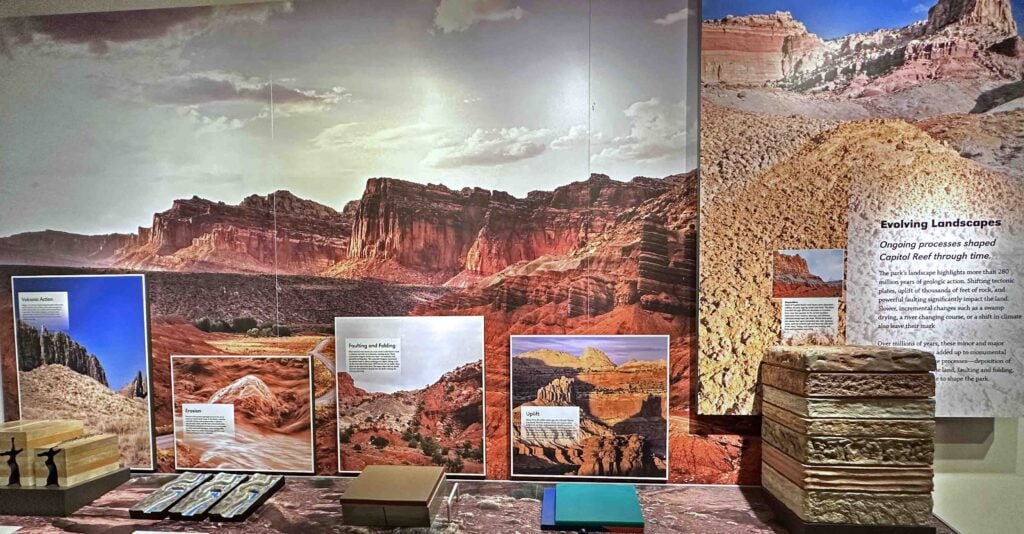
Learning the Shape of Time Through Stone
The rocks here speak in color and texture, each layer a sentence in a very long story. We found ourselves tracing lines with our eyes, following bands of red, cream, and gray that marked shifting environments across unimaginable spans of time. These stones were once riverbeds, dunes, and shallow seas, now lifted and exposed by the same folding forces that shaped the land.
What struck us most was how readable the story felt once we slowed down. You do not need a scientific background to sense the rhythm. Softer layers erode into rounded forms, while harder rock stands firm, creating ledges and walls. The contrast between them explains why the scenery feels sculpted rather than shattered. Time here works like a careful hand, removing just enough to reveal what lies beneath.
As a couple, we often talk about how travel helps us understand scale. Standing among these formations, we felt both small and deeply connected. These rocks predate every human story we know, yet they shape our experience in the present moment. The land reminds us that history is not only written by people. Sometimes, it is written by time itself.
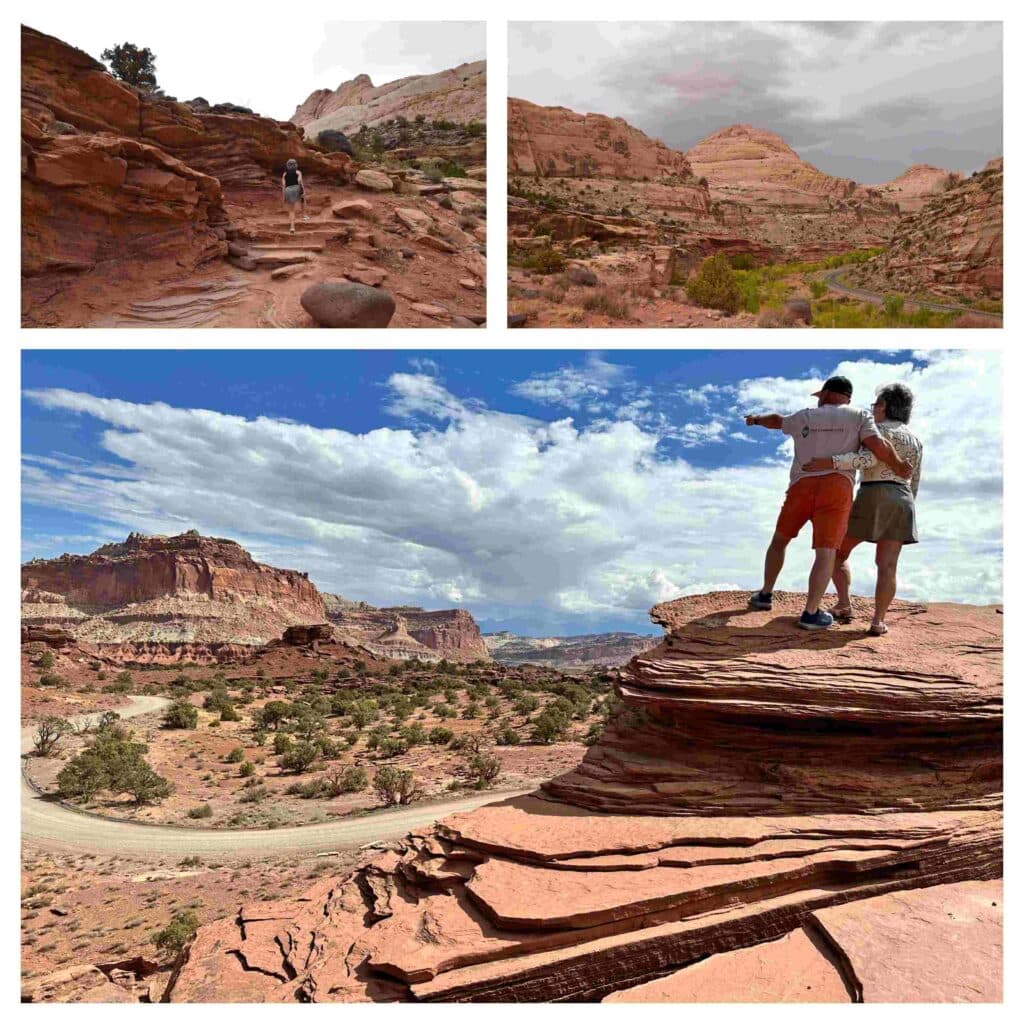
Seeing Capitol Reef From Above
Gaining elevation changed our perspective. As we climbed higher, the landscape rearranged itself into a coherent whole. From above, Capitol Reef stopped feeling mysterious and began to feel intentional. The long fold revealed its direction, stretching like a spine across the horizon. Valleys aligned. Cliffs formed patterns. What once seemed chaotic now felt composed.
We realized that perspective is the park’s greatest teacher. From lower ground, the formations can feel overwhelming, even disorienting. From above, they make sense. Height offers context, allowing the eye to follow the land’s logic. We could see how water once flowed, how rock layers tilted together, how erosion respected the structure laid down millions of years before.
This shift in understanding mirrored something personal. Traveling together, we often find that stepping back brings clarity. Here, the land demonstrated that lesson beautifully. Elevation did not just offer views. It offered understanding. We left those higher places feeling more grounded and grateful for the reminder that perspective changes not only what we see, but how we think about it.
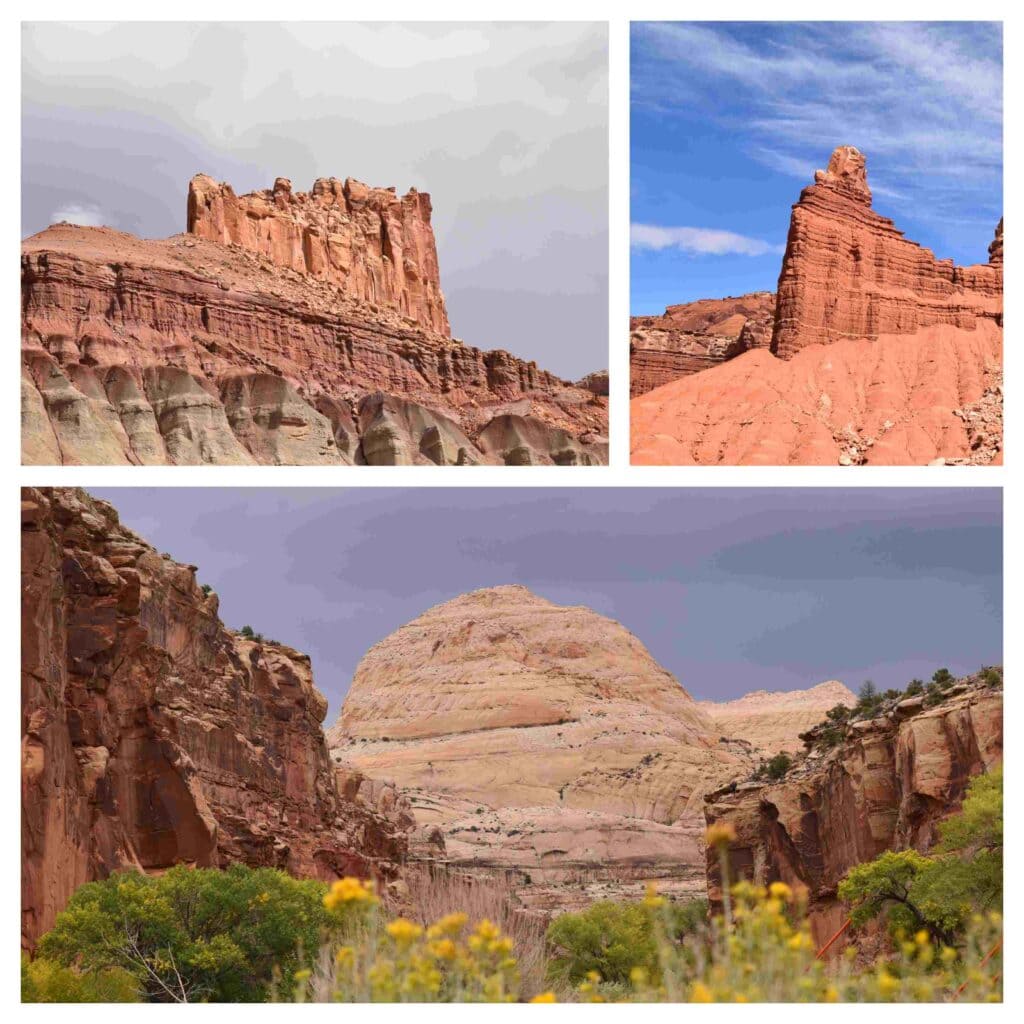
Landmarks That Teach Us How to Look
Certain formations stopped us in our tracks, not because they were famous, but because they felt expressive. Domes rose like weathered sentinels. Towers and fins caught the light differently as the sun moved, changing mood without changing shape. These landmarks felt less like attractions and more like characters, each with a role in the larger story.
We learned to observe rather than photograph first. Light revealed texture. Shadows explained depth. Some formations looked solid from one angle and fragile from another. This variability encouraged patience. The land rewards those willing to linger, to notice how stone responds to time and weather.
What we appreciated most was how these landmarks guided our attention outward and inward. They taught us to look carefully, not just at the rock, but at how we were responding to it. Awe does not always arrive loudly. Sometimes it settles in quietly, asking us to stay present. In those moments, the park felt less like a destination and more like a conversation between place and observer.
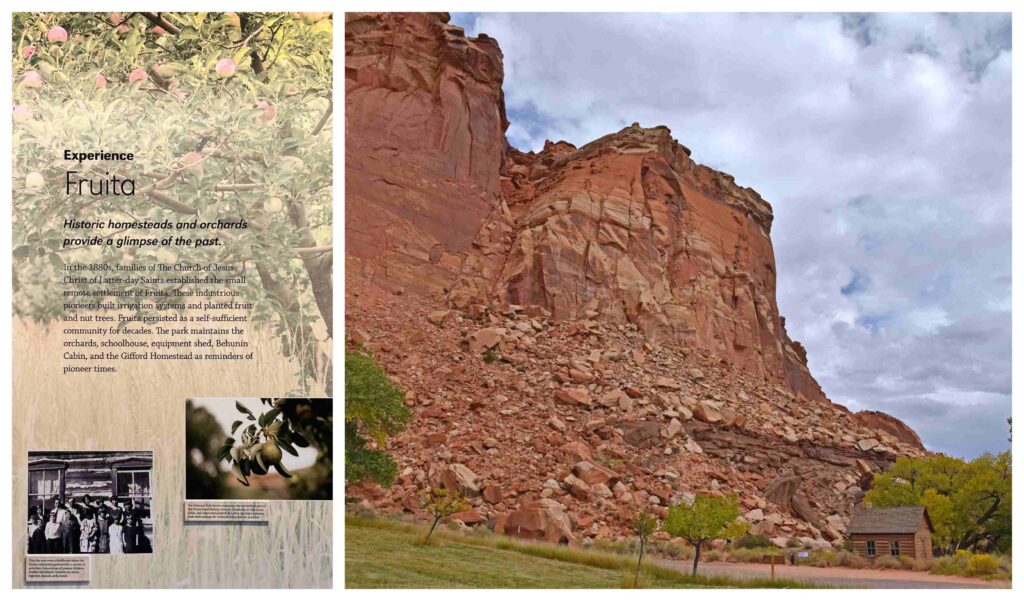
Fruita and the Human Hand in the Desert
Amid all this stone and silence, the story of Fruita feels almost improbable. Long before the area became protected, early settlers learned of water and soil tucked within the fold. They planted orchards, built homes, and carved out a life that depended on cooperation with the land.
Walking through this historic area, we felt the intimacy of human scale return. Trees offered shade. Fruit trees followed seasonal rhythms within the shadow of the surrounding cliffs. The preservation of Fruita allows us to see how people once lived within the boundaries set by geology. It is a reminder that survival here required observation, adaptation, and respect.
The decision to protect this settlement as part of the park ensures that the human story remains visible. Capitol Reef is not only about ancient forces. It is also about the quieter resilience of those who learned to listen to the land. Their legacy adds warmth to the stone and reminds us that history lives in both rock and root.
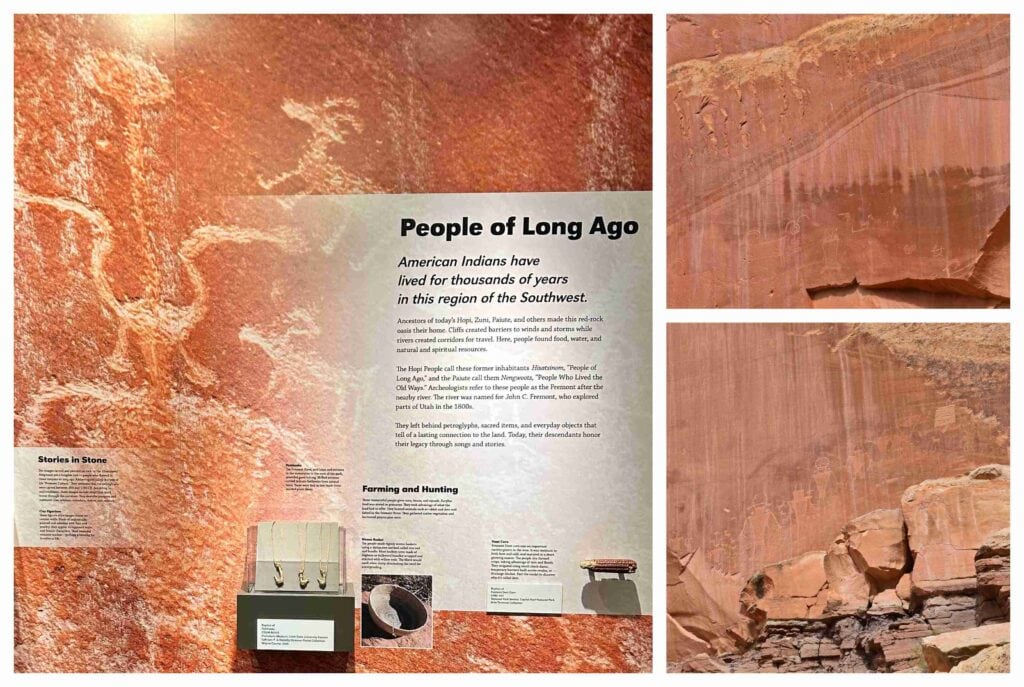
Stories Written Before Us
Long before settlers arrived, Indigenous peoples lived, traveled, and recorded their presence here. Petroglyphs etched into stone walls remain as powerful reminders of those earlier lives. We learned that these markings are not decorations, but messages passed down through generations.
Standing before them, we felt a deep sense of awe. These images connect us to people who understood this landscape intimately, who observed its cycles and respected its limits. The carvings endure because the stone endures, and because the stories mattered enough to be preserved in a permanent medium.
We found ourselves thinking about continuity. The land has witnessed countless lives, each leaving its own traces. The petroglyphs invite reflection. They ask us to acknowledge past presence. To recognize that our visit is only one moment in a very long human relationship with this place. Respect, here, feels like the most important lesson.
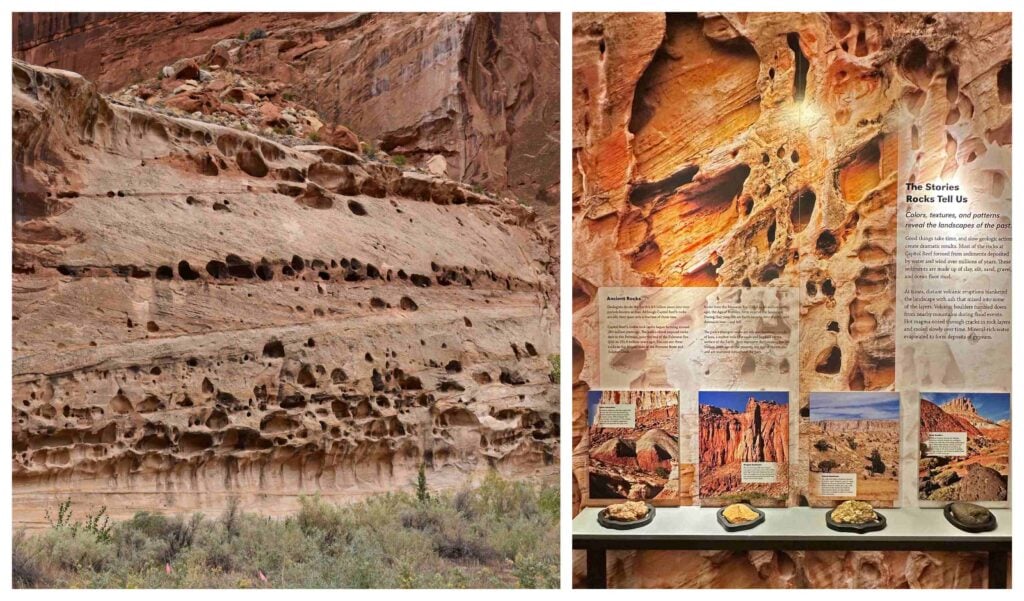
Reading the Earth Without a Textbook
By the time we reached this point in our journey, we realized how the park gently teaches geology. Nothing feels rushed or overly technical. Instead, the land explains itself if you give it time. Sediment built layer by layer, pressed down by its own weight, then slowly lifted and bent as the Earth shifted sideways. Erosion did the rest, patiently revealing what had been hidden for ages.
What helped us most was thinking of the landscape as a cross-section of time. Instead of digging downward, the land has been tilted upward, allowing us to walk alongside history rather than above it. Softer layers weather away first, while harder stone holds its shape, creating cliffs, domes, pockets, and shelves that feel deliberate even though they are entirely natural.
We could see cause and effect written clearly in stone. That clarity is part of what makes Capitol Reef so welcoming to first-time visitors. You do not need diagrams to understand it. Curiosity and observation are enough. The land does the teaching, and it does so with remarkable patience.
Carrying the Feeling Home
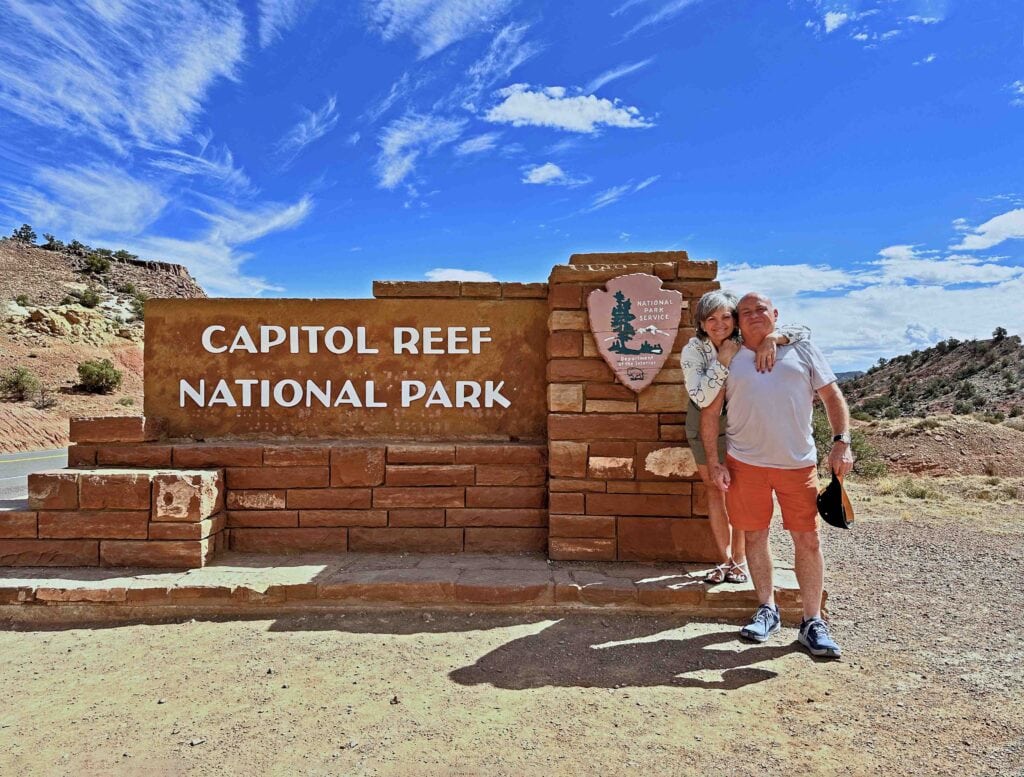
As our time in Capitol Reef drew to a close, we felt a sadness that comes with the close of a chapter. The park sits in south-central Utah, reachable via scenic highways that already feel like part of the experience. It is generally open year-round, with a central area that is easy to explore over one or two full days. We found that lingering rewards those who can spare the time. There is a modest entrance fee, or you can use a national parks pass.
Facilities are thoughtfully placed, and distances between major areas are easily manageable. We appreciated how the park allows visitors to set their own pace. You can stop often, wander briefly, or sit quietly and let the land work on you. That flexibility makes it especially inviting for those encountering this kind of landscape for the first time.
When we finally turned away, what stayed with us was not a checklist of sights, but a sense of understanding. The park gave us perspective not just on geology but on time and place. We left feeling grateful for a landscape that asks us to slow down and listen.