
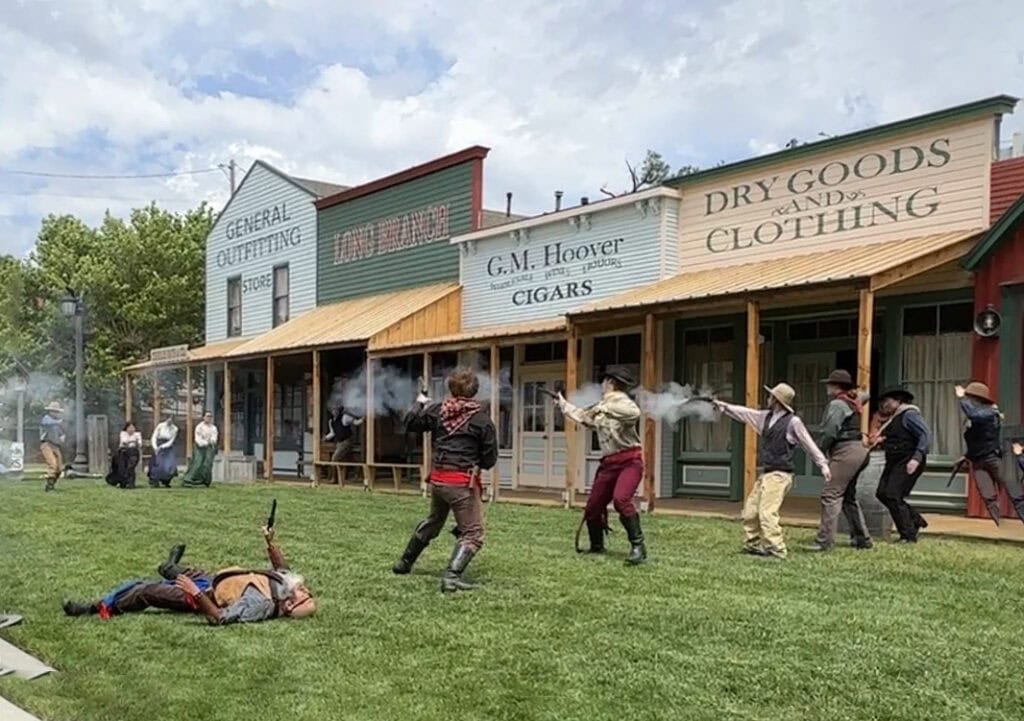
Some places are worth visiting more than once, and Boot Hill Museum is certainly one of them. Since our previous trip to Dodge City, the museum has undergone significant renovations that have expanded both its exhibits and the stories they tell. We were excited to see how the experience had evolved while still honoring the legends that made this frontier town famous.
Walking through the entrance, it became clear that this is much more than a collection of Old West artifacts. The redesigned galleries place greater emphasis on the people who shaped western Kansas, beginning long before Dodge City became known for cattle drives, saloons, and legendary lawmen. Rather than jumping straight into gunfights, the museum thoughtfully builds the story from the ground up, creating a richer understanding of how this remarkable community came to exist.
That broader perspective made our visit even more rewarding. Every exhibit helped explain not only what happened here, but why it mattered. By the time we reached the recreated streets of Dodge City, we already understood the centuries of history that made the city’s explosive growth possible.
We want to thank Visit Dodge City and Boot Hill Museum for their hospitality. Rest assured that all opinions are our own.
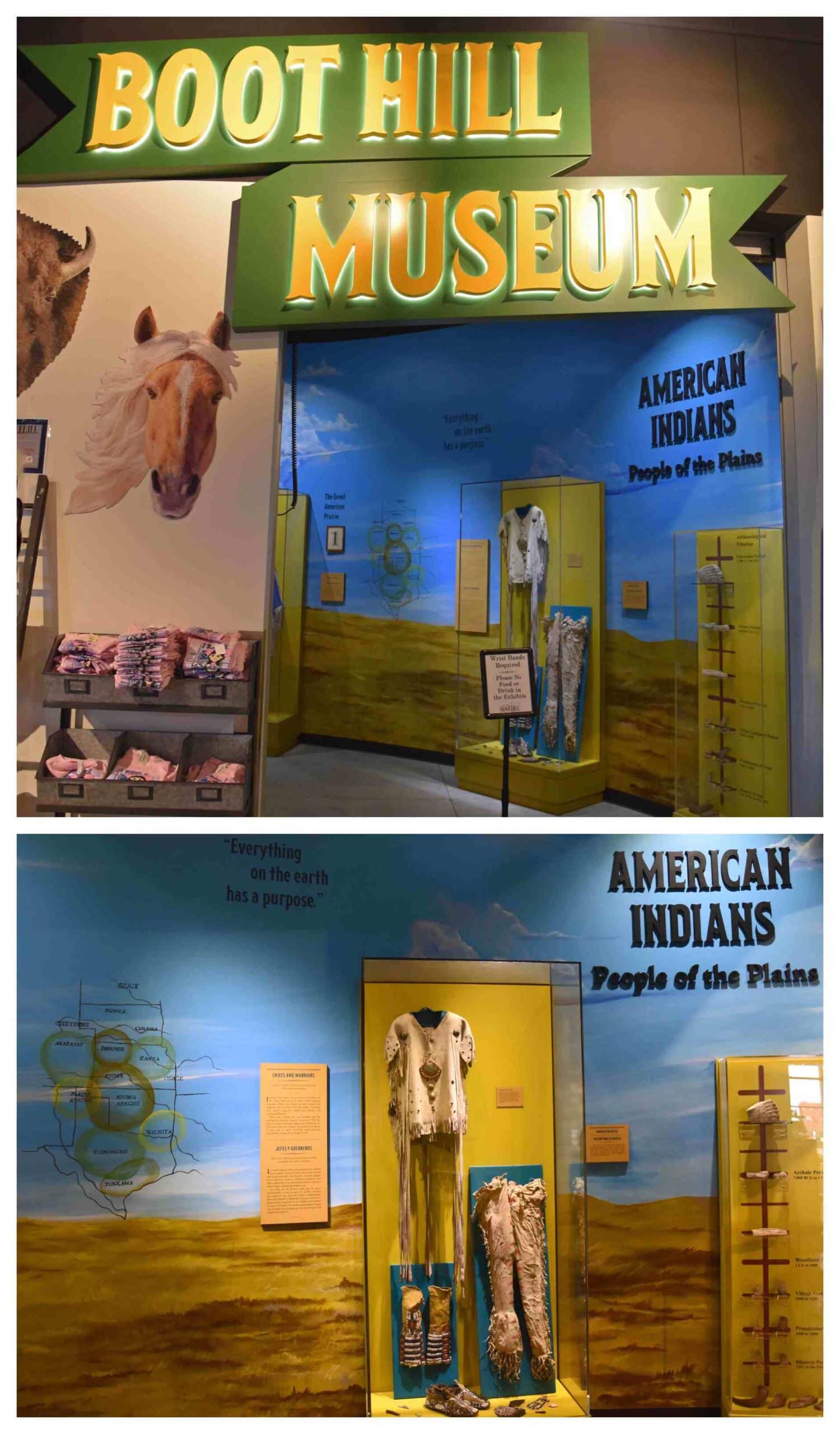
Before Dodge City: The First People of the Plains
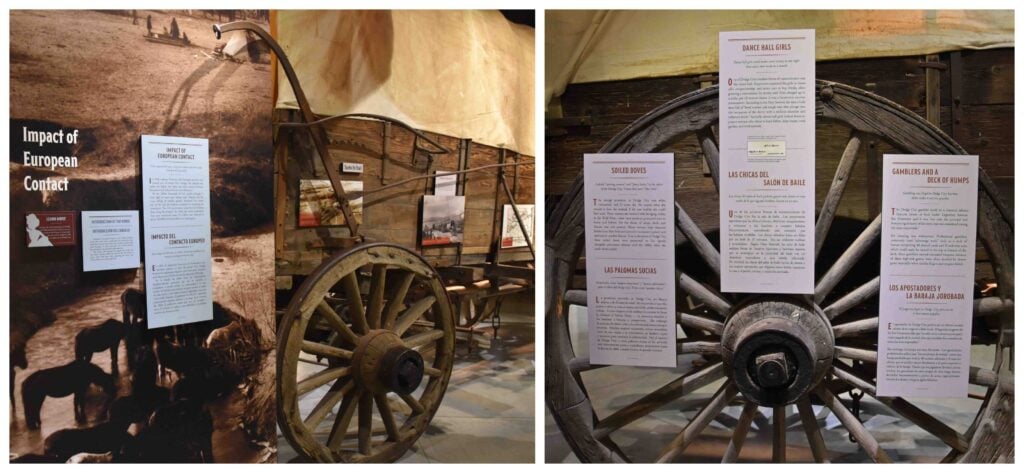
Long before cattle trails crossed western Kansas, the Great Plains were home to Indigenous nations whose cultures were closely tied to the land. Tribes including the Kiowa, Cheyenne, Arapaho, Comanche, Apache, and later the Lakota traveled these grasslands in seasonal migrations, following the enormous buffalo herds that sustained their communities.
The museum presents these cultures as sophisticated societies rather than simply background characters in frontier history. Families understood the rhythms of the prairie, knew where water could be found, and adapted to one of North America’s most demanding environments. Their knowledge of weather, wildlife, and migration allowed them to thrive for generations.
One of the things we appreciated most was how the exhibits encouraged visitors to view Dodge City’s history over a much longer timeline. The arrival of settlers did not begin the story. Instead, it marked the beginning of a dramatic transformation that forever altered a landscape already rich with history.
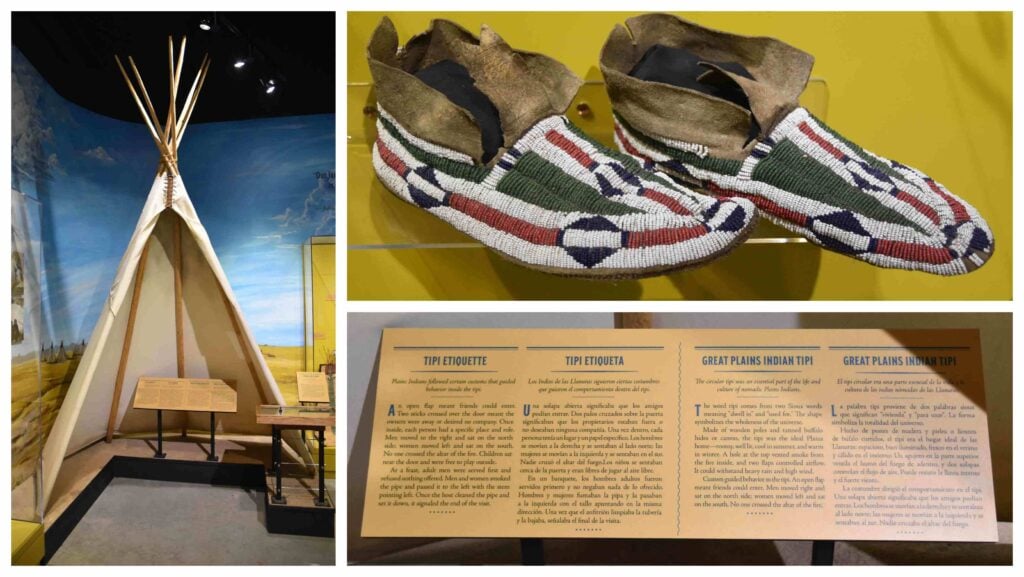
Life Inside a Tipi
The Boot Hill Museum tipi exhibit offers visitors a better understanding of daily life on the Plains. Although often mistaken for primitive shelters, tipis were remarkably advanced structures. Their design allowed families to assemble, dismantle, and transport their homes quickly while following buffalo migrations.
The museum also explains that life inside a tipi followed traditions that reflected respect for family and community. Visitors were expected to wait for an invitation before entering. Entering clockwise, respecting the family’s space, and accepting hospitality graciously were all important customs. Even the placement of personal belongings and sleeping areas followed established traditions.
Crystal especially enjoyed learning about the family life that unfolded inside these homes. While the tipi appears simple from the outside, it served as a warm, comfortable, and highly efficient home that reflected generations of knowledge passed from one family to the next.
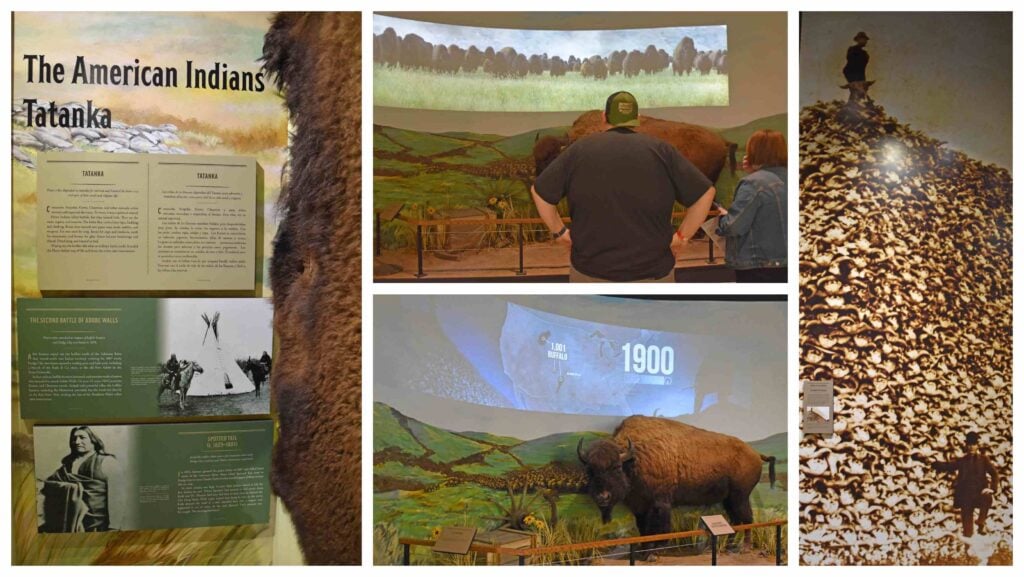
Tatanka: The Heartbeat of the Plains
For the Indigenous nations of the Great Plains, the buffalo was far more than a source of food. Known by many tribes as Tatanka, it represented life itself. Every successful hunt provided meat to feed families, hides for clothing and shelter, bones for tools, sinew for sewing, and horns for utensils. Nearly every part of the animal served a purpose, allowing entire communities to thrive on the open prairie with remarkably little waste. The buffalo was woven into daily life, spiritual beliefs, and cultural traditions that had developed over countless generations.
One exhibit that especially caught our attention illustrates just how abundant these animals once were. Before European settlement transformed the Plains, an estimated 30 to 60 million buffalo roamed North America. Their immense herds shaped the grasslands as they migrated, creating an ecosystem that supported countless other species. For Indigenous peoples, following these migrations meant following life itself.
That relationship began to unravel during the second half of the nineteenth century. As railroads expanded westward and commercial hide hunting became increasingly profitable, buffalo were killed by the millions. While hunters earned money from hides and bones, many military and government leaders recognized another advantage. Eliminating the buffalo meant eliminating the primary food source for many Plains tribes, making it far more difficult for them to resist relocation onto reservations.
Standing before the museum’s displays, it is impossible not to reflect on the scale of that loss. The near extinction of the buffalo was not simply an environmental disaster. It was also a devastating cultural tragedy that forever altered the lives of the Indigenous peoples who had depended on Tatanka for centuries. Fortunately, conservation efforts have helped restore small herds across North America, allowing this iconic symbol of the Great Plains to roam portions of its historic range once again.
How Dodge City Was Born
As American settlement pushed westward, the Santa Fe Trail transformed this region into an important transportation corridor. Military protection arrived with nearby Fort Dodge, while railroad expansion opened the area to commerce and settlement. Soon, Texas cattle drives found western Kansas to be an ideal shipping point.
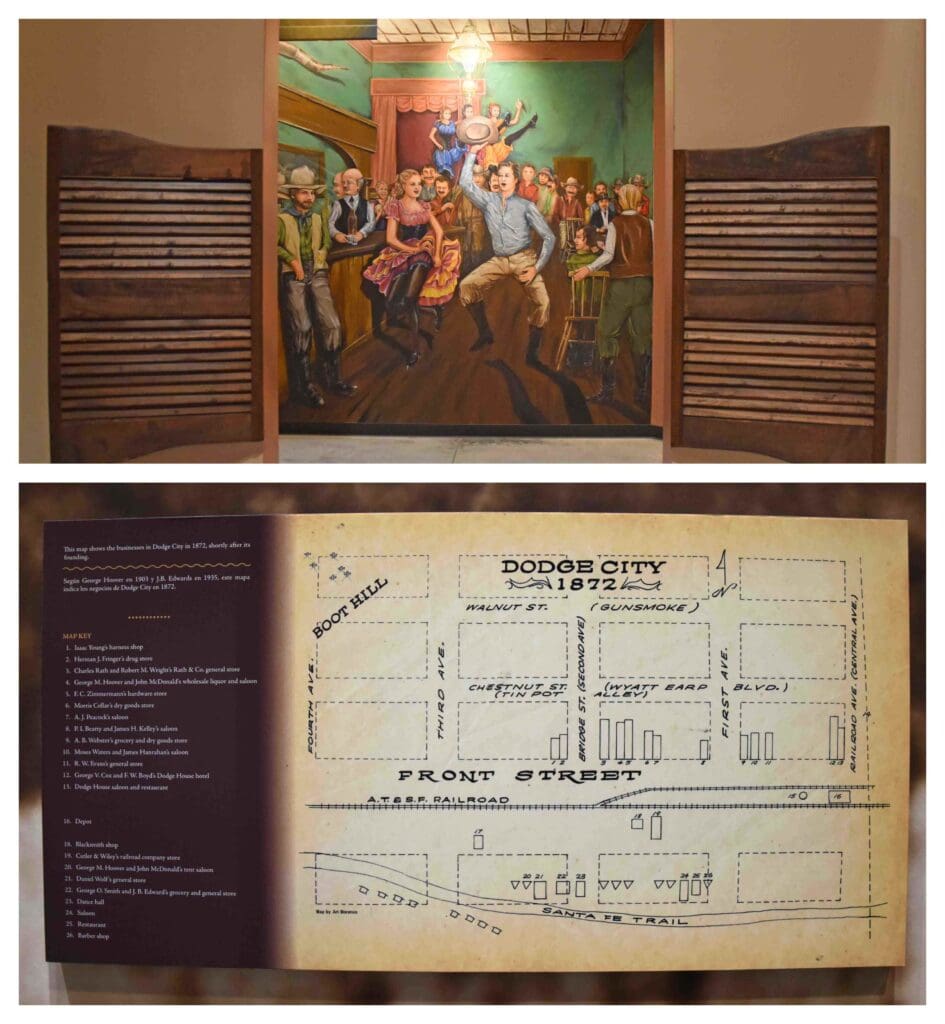
Dodge City officially emerged in 1872, strategically positioned near the railroad and the Arkansas River. Thousands of longhorn cattle arrived each season, accompanied by cowboys eager to celebrate after months on the trail. Hotels, saloons, gambling halls, restaurants, and other businesses appeared almost overnight to serve the growing population.
The museum illustrates how quickly opportunity attracted people from every background. Merchants, entrepreneurs, immigrants, laborers, and ranchers all contributed to the city’s rapid development. What began as a rough frontier settlement soon became one of the most recognizable names in the American West.
A City Divided by Front Street
One of the most fascinating stories we discovered involved the social divide within early Dodge City. South of Front Street stood the city’s infamous entertainment district. Saloons, dance halls, gambling establishments, and brothels catered to cowboys who had just completed exhausting cattle drives.
North of Front Street, however, residents sought a very different future. Families established homes, churches, schools, and respectable businesses. Civic leaders worked to create stability and encourage permanent settlement, even while vice flourished only a short walk away.
That contrast shaped the city’s identity. Dodge City earned its wild reputation because visitors often experienced only the southern side of town. Yet beyond the saloons was a growing community determined to build something lasting. The museum does an excellent job of showing both sides of that story rather than relying solely on Hollywood mythology.
Lawmen, Legends, and Moral Gray Areas
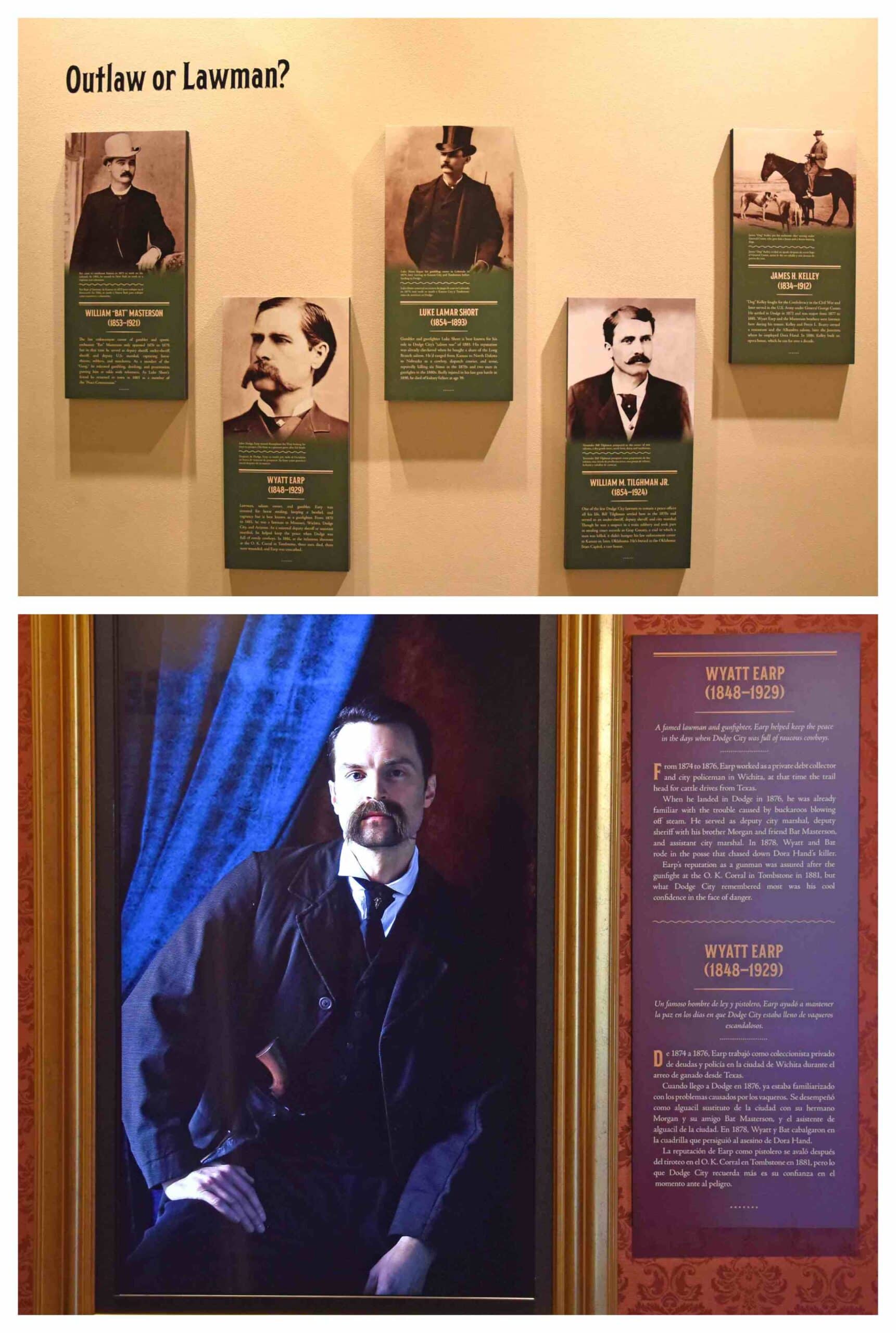
No visit would be complete without meeting the famous law enforcement officers associated with Dodge City. Names like Wyatt Earp, Bat Masterson, Charlie Bassett, and Bill Tilghman continue to capture the imagination more than a century later. Video portraits allow visitors to hear the words of these men. It helped us gain a better understanding of life in Dodge City as it struggled to become a community.
The museum also reminds visitors that frontier justice was rarely straightforward. Many law enforcement officers had previously worked as buffalo hunters, gamblers, or saloon employees. Some later became gamblers themselves or pursued other questionable occupations. Likewise, individuals sometimes moved between the two sides of the law depending on the circumstances.
Rather than presenting these men as flawless heroes, the exhibits portray them as complex individuals navigating an unpredictable frontier. That honesty made their stories even more interesting. The line separating lawman from outlaw was often far thinner than popular culture suggests.
History Comes Alive
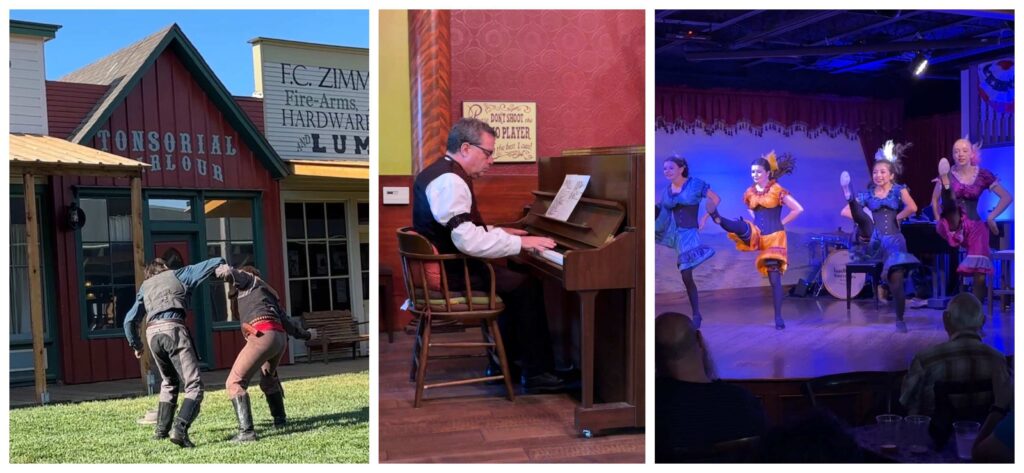
After exploring the exhibits, visitors can experience history in action through Boot Hill Museum’s live entertainment. The famous gunfight reenactments recreate the excitement and tension of Dodge City’s frontier days while blending historical inspiration with family-friendly fun.
Later in the day, the Long Branch Variety Show transports audiences into an authentic nineteenth-century-style saloon filled with music, comedy, and lively performances. These productions add an entertaining conclusion to a day spent learning about frontier history and help visitors appreciate the colorful personalities who once filled Dodge City’s streets.
For us, these performances perfectly complemented the museum itself. After spending hours learning about the people who shaped Dodge City, it was enjoyable to watch the town’s larger-than-life spirit come alive once again.
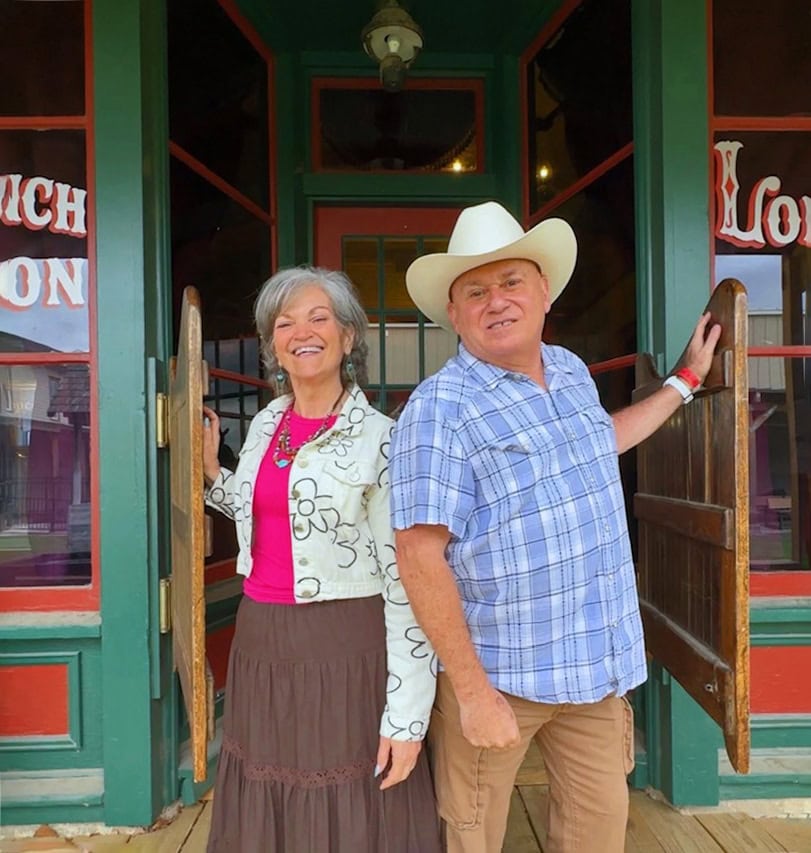
Planning Your Visit to Boot Hill Museum
Boot Hill Museum remains one of Kansas’ premier historical attractions because it tells a much larger story than many visitors expect. Rather than focusing exclusively on gunfighters, it explores centuries of Plains history, Indigenous cultures, westward expansion, cattle drives, and the people who transformed a frontier settlement into one of America’s most legendary cow towns.
Plan to spend at least two to three hours exploring the museum, although history enthusiasts could easily stay longer. The grounds offer accessible pathways, accessible restrooms, ample free parking, and family-friendly exhibits throughout. Nearby attractions include the Santa Fe Trail Ruts, the historic downtown district, and several Wyatt Earp landmarks that pair nicely with a visit.
As of this writing, summer hours (Memorial Day through Labor Day) are daily from 8:00 a.m. to 8:00 p.m. Off-season hours are Monday through Saturday from 9:00 a.m. to 5:00 p.m. and Sunday from 1:00 p.m. to 5:00 p.m. General museum admission begins at $20 for adults, with discounted rates for seniors and children. Premium summer packages that include the gunfight, dinner, and Long Branch Variety Show are also available. Since admission and schedules occasionally change, it’s always wise to check the museum’s website before your trip.
Our return visit reminded us that the American West is far more complex than its legends. Behind every famous gunfight lies a deeper story of cultures, conflict, perseverance, and community. Boot Hill Museum captures those stories exceptionally well, making it one of the most rewarding stops in western Kansas.
Have you visited Boot Hill Museum? We’d love to hear about your experience. Share your favorite exhibit, performance, or discovery in the comments below.

OMG. Did I miss a lot. We passed by Dodge City once, from Pittsburg, Kansas back to Phoenix. We missed to visit this Museum that told a lot of the town! Love the longhorn statue in the middle of it all.
Now you have a reason to stop back by!
Thanks for the fun post about Dodge City and the Boot Hill Museum. Definitely looks like a great place to spend the day.
You are quite welcome. Glad you enjoyed it.
I love visiting places that are living museums and historic places to visit – this is right up my alley of amazing areas. Fantastic tour and story
Hope you get to visit.
Areas like this are always interesting because they’re so full of history and they let you imagine what it would be like to have lived then. Would love to check it out in person!
So true. A person can imagine the excitement and danger of those bygone days. Hope you make it there someday.
Love that Wild West environ. I hope to visit Dodge City and Boot Hill very soon.
Hope you get to. It is truly a taste of the Wild West.
I’ve always enjoyed visiting Boot Hills out here in California but have never been to Dodge City. I enjoyed this photo visit.
Perhaps some day you will get to visit the original Boot Hill in Dodge City. Thanks for checking out our site.
I enjoyed your article, but your photos are fantastic! I really want to visit Dodge City now!!
Thanks! We hope you get the opportunity.
Your photos from the Boot Hill Museum are wonderfully atmospheric! You could spend several weeks just visiting these remnants of the “wild west”: places like Tombstone, Arizona and Deadwood, South Dakota. One of my favorites is Bodie, California, which is east of Yosemite near the border with Nevada. It’s an old mining town, but instead of restoring it or letting it fall to ruin, they keep it in a state of “arrested decay”.You can peer into the windows and see the old furniture and the wallpaper peeling off the walls.
That sounds like an interesting adventure. We will have to check it out. Thanks for the tip.