
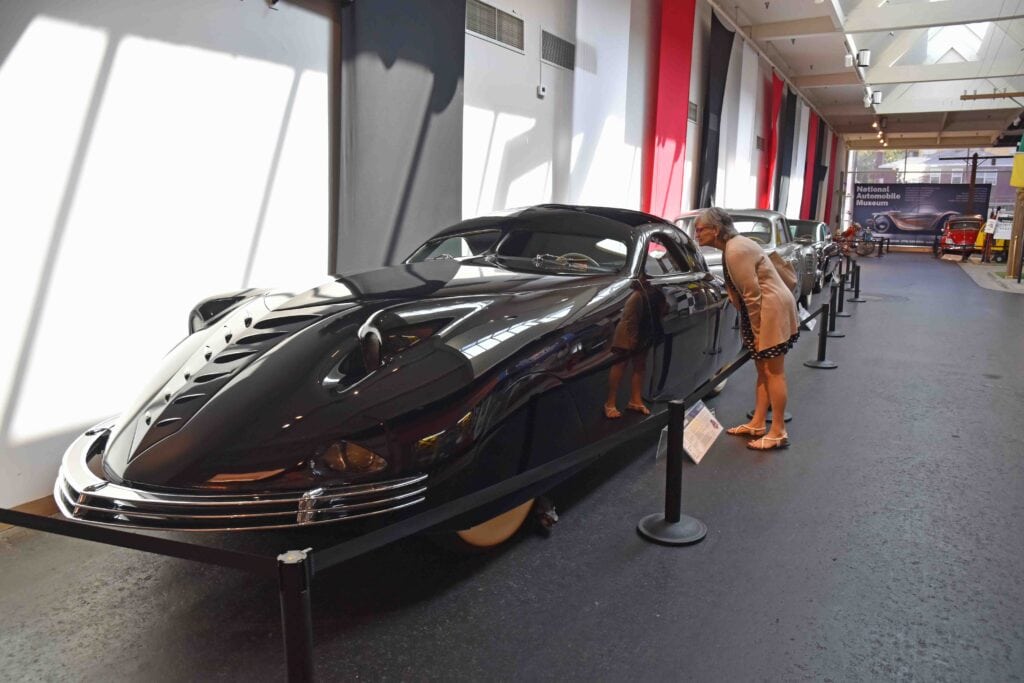
Reno, Nevada has a way of surprising travelers. Beyond the bright lights and bustling casinos sits a treasure trove for anyone curious about the early days of transportation. During our visit to the National Auto Museum, we found ourselves stepping into a time when automobiles were still an experiment. Every new design carried the promise of changing how people moved across the country.
The museum sits along the Truckee River at 10 South Lake Street in Reno, Nevada. From the outside, it looks modern and understated, but inside, it holds one of the most remarkable collections of automobiles in the United States. As we walked through the doors, we quickly realized this would be more than a stroll past polished cars. It was an opportunity to explore the imagination and ingenuity that brought the automobile into everyday life.
Rare Automotive Treasures
One of the things that immediately stood out during our visit to the National Auto Museum was the number of rare vehicles housed within its galleries. Some automobiles exist in only a handful of examples, while others are truly one-of-a-kind. Standing before them feels like meeting a long-forgotten chapter of history face-to-face.
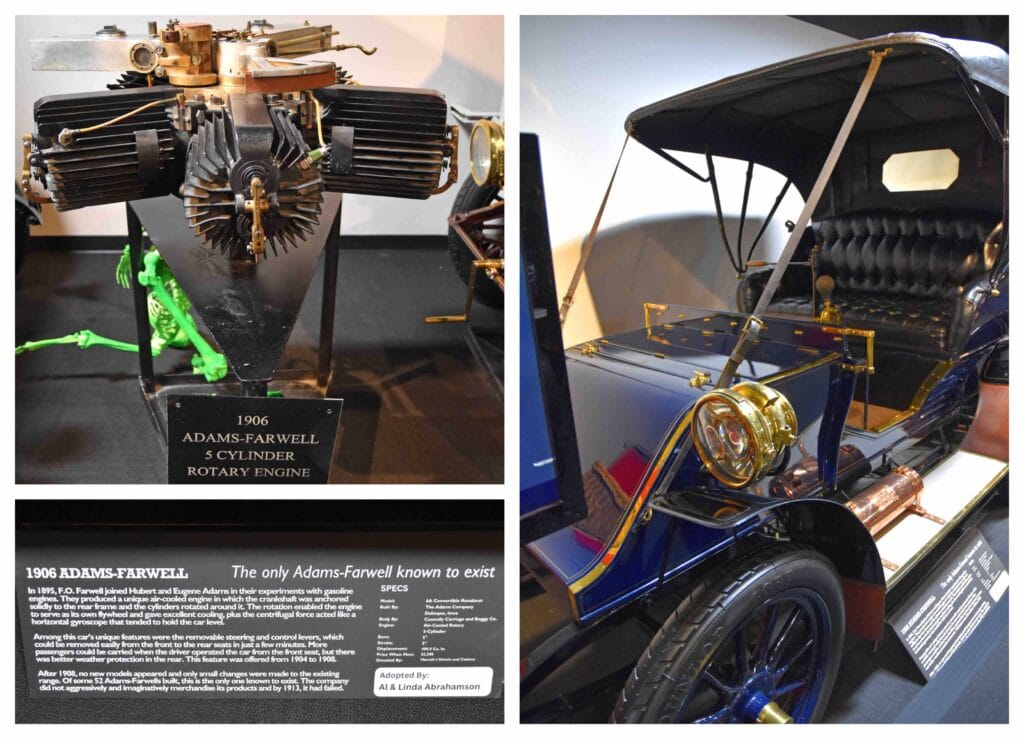
Among the most fascinating examples is the 1906 Adams Farwell. The museum’s car is believed to be the only one known to exist today. It captures the experimental spirit of the early automobile era, when engineers were still trying to figure out the best way to power these new machines.
The Adams Farwell is remarkable not only because it survived but because of its unusual engineering. Instead of a typical engine layout, it used a horizontally mounted rotating-cylinder engine. Looking at it, we could not help but marvel at how inventors of the early twentieth century were willing to try almost anything in their pursuit of the perfect automobile.
From Horseless Carriages to Family Jalopies
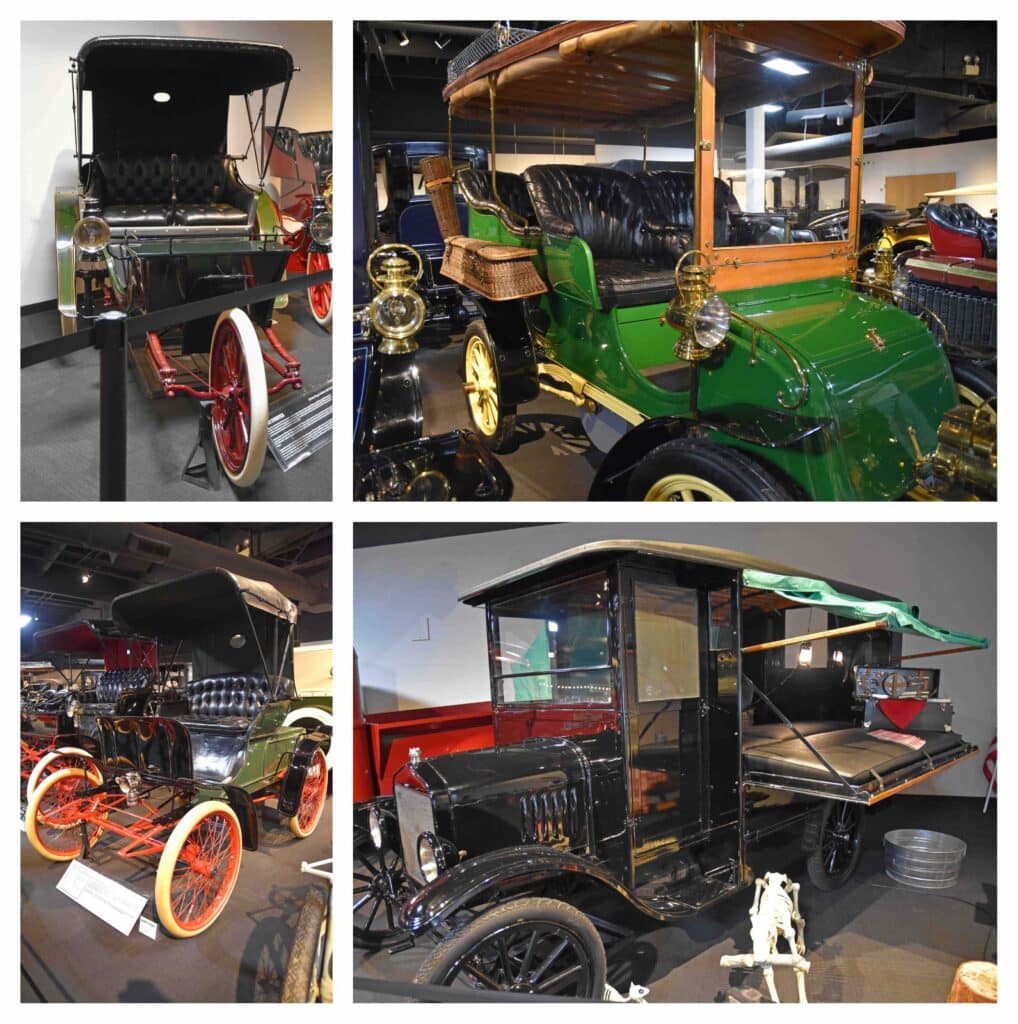
Walking deeper into the galleries reveals just how dramatically automobiles evolved in a short amount of time. Early vehicles often looked more like horse-drawn carriages that had lost the horse. Their tall wheels, upright seating, and simple bodies still reflected the transportation traditions people already understood.
These early designs were practical experiments. Inventors borrowed familiar carriage shapes because they were already proven. Yet even in these earliest models, you can see the seeds of innovation taking hold as engines grew stronger and frames more capable.
Before long, automobiles began to transform into something entirely new. Vehicles became wider, lower, and more comfortable. What once resembled a carriage slowly turned into the kind of jalopy families might pile into for a weekend outing. Watching that evolution unfold from one display to the next made the early automobile era feel like a living laboratory of ideas.
The Thomas Flyer’s Legendary Journey
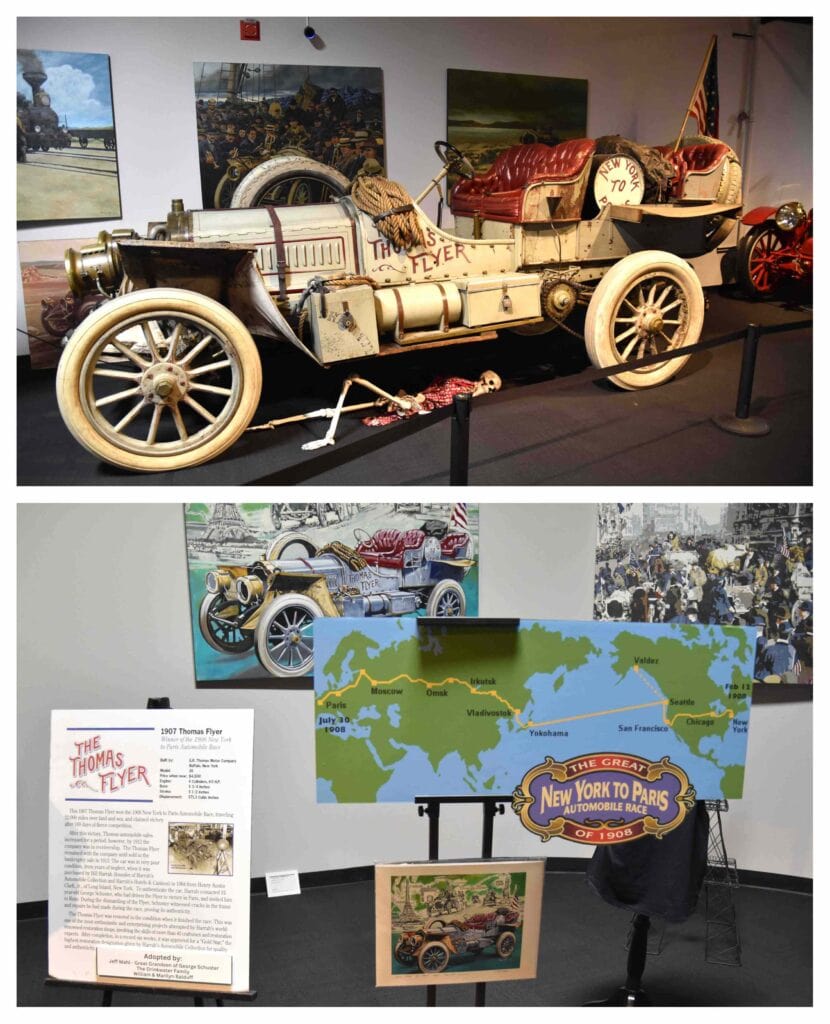
Among the many remarkable vehicles inside the National Auto Museum, the Thomas Flyer stands out as a true adventurer. This automobile is forever tied to one of the greatest endurance stories in automotive history.
In 1908, a Thomas Flyer won the New York-to-Paris Race, an around-the-world competition that pushed both machines and drivers to their limits. The race covered thousands of miles across rough roads, muddy trails, and even frozen landscapes. At times, the drivers had to improvise repairs to keep moving forward.
Seeing the Thomas Flyer in person makes that achievement feel far more real. The vehicle itself looks sturdy but simple by modern standards. Yet it proved capable of traveling across continents during a time when roads were often little more than dirt tracks. Standing beside it, we could not help but imagine the courage and determination required to undertake such a journey.
Electric Cars Were There From the Beginning
One of the most surprising discoveries was learning that electric vehicles are not a modern idea at all. In fact, they were present during the earliest days of the automobile.
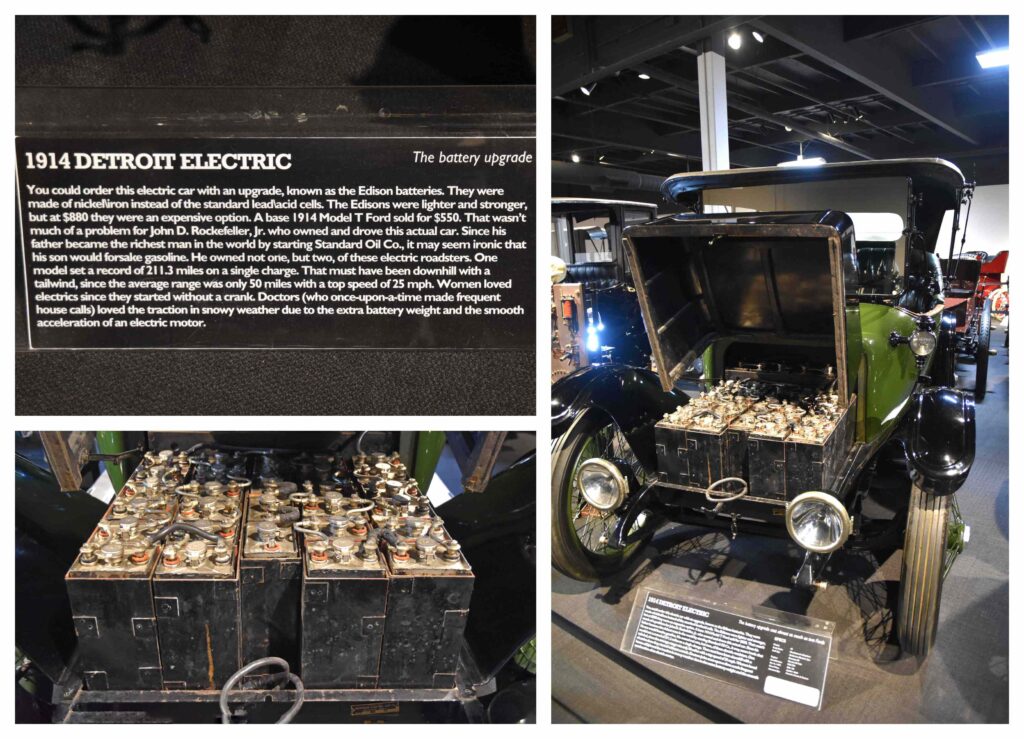
A wonderful example of this is the 1914 Detroit Electric. These cars were quiet, smooth, and easy to operate compared with gasoline vehicles of the same era. For many drivers, especially in cities, electric cars were a practical alternative.
The Detroit Electric reminds us that automotive history has always been full of competing ideas. Gasoline power eventually dominated the market, but electric vehicles never truly disappeared. Seeing one of these early models made it clear that the push toward electrification today is really a continuation of experiments that began more than a century ago.
The Changing Shapes of the Automobile
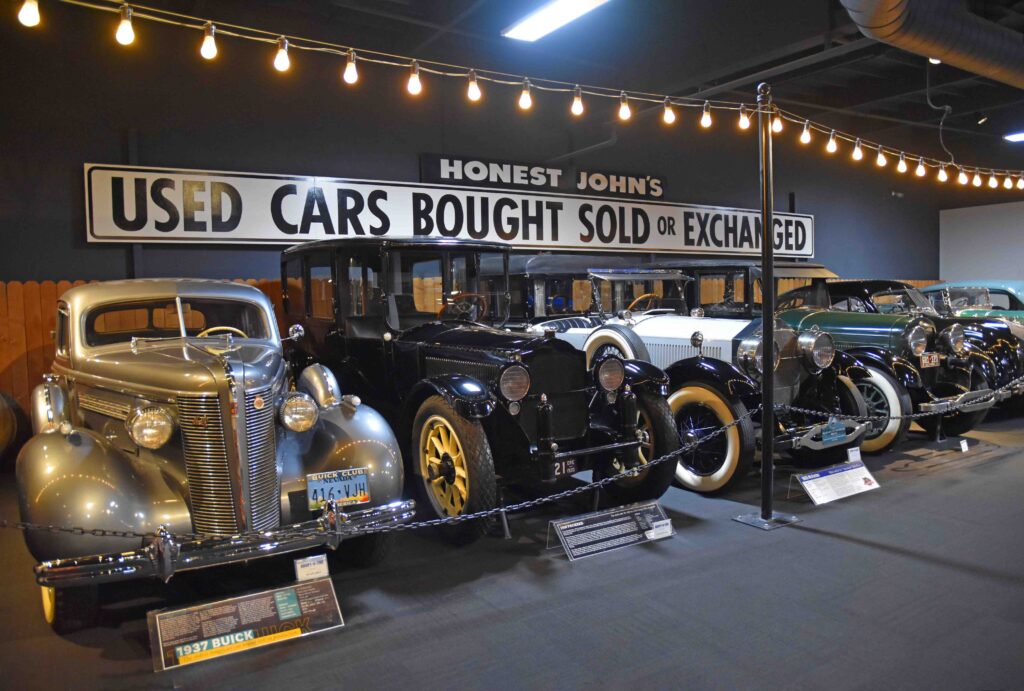
As the decades rolled forward, automobiles began to change in ways that reflected both technological and stylistic shifts. One display grouped together cars from the 1930s, 40s, and 1950s, offering a fascinating glimpse at how design had evolved.
These vehicles feel dramatically different from their early ancestors. Bodies became sleek and streamlined, chrome accents appeared everywhere, and designers leaned heavily into bold shapes that suggested speed and optimism.
Gazing at these cars, we could see how automobiles had become more than transportation. They were symbols of identity and aspiration. Families no longer just needed a vehicle to get from place to place. They wanted one that reflected the spirit of the era.

Creativity Behind the Wheel
A common thread we noticed at the National Auto Museum was the incredible creativity displayed by automobile designers. Engineers and artisans seemed eager to test the limits of what a car could be.
We spotted vehicles with unusual details that immediately sparked curiosity. A copper-clad Rolls-Royce gleams under the lights, its metallic body reflecting the room around it in warm tones. Nearby, hardtop convertibles showcase an innovative approach to blending open-air driving with the structure of a traditional coupe.
Looking closely at these designs reminds us that automobiles were never purely mechanical creations. They were also works of art shaped by imagination and craftsmanship. Every curve, surface, and detail reflects a moment when someone asked how a car might be made just a little more remarkable.

The Wild Era of Funny Cars
Tucked among the polished classics and elegant touring cars, we stumbled upon a display that instantly pulled us into a different kind of automotive history. The era of Funny Cars brought a bold sense of personality to the racing world. The vehicles on display captured that spirit perfectly. Their exaggerated shapes, colorful graphics, and larger-than-life presence felt worlds away from the refined automobiles that came before them.
Funny Cars emerged in the 1960s and 1970s, when drag racing was rapidly gaining popularity. Engineers and racers pushed the limits of performance, creating machines that looked almost cartoonish compared to traditional automobiles. Their bodies were stretched, widened, and dramatically reshaped to maximize speed and spectacle. Standing in front of them, it felt less like looking at a car and more like witnessing a rolling piece of racing theater.
For me, this display sparked a wave of childhood memories. Growing up in the early 1970s, Funny Cars were everywhere in model kits and racing magazines. I remember sitting at the kitchen table assembling plastic model cars with wild paint jobs that seemed straight out of the future. Flames, bold lettering, and vibrant colors covered every inch of those tiny replicas, each one promising speed and excitement.
Seeing these cars again felt like revisiting that moment. It reminded us that the story of the automobile is not only about engineering breakthroughs but also about imagination. From early horseless carriages to flamboyant drag racers, every generation has found its own way to express personality through the machines we drive.
Inspiring the Next Generation
While much of the National Auto Museum celebrates history, the museum also remembers that curiosity often begins at a young age. Families visiting with children will discover a playful area designed to spark interest in how automobiles work.
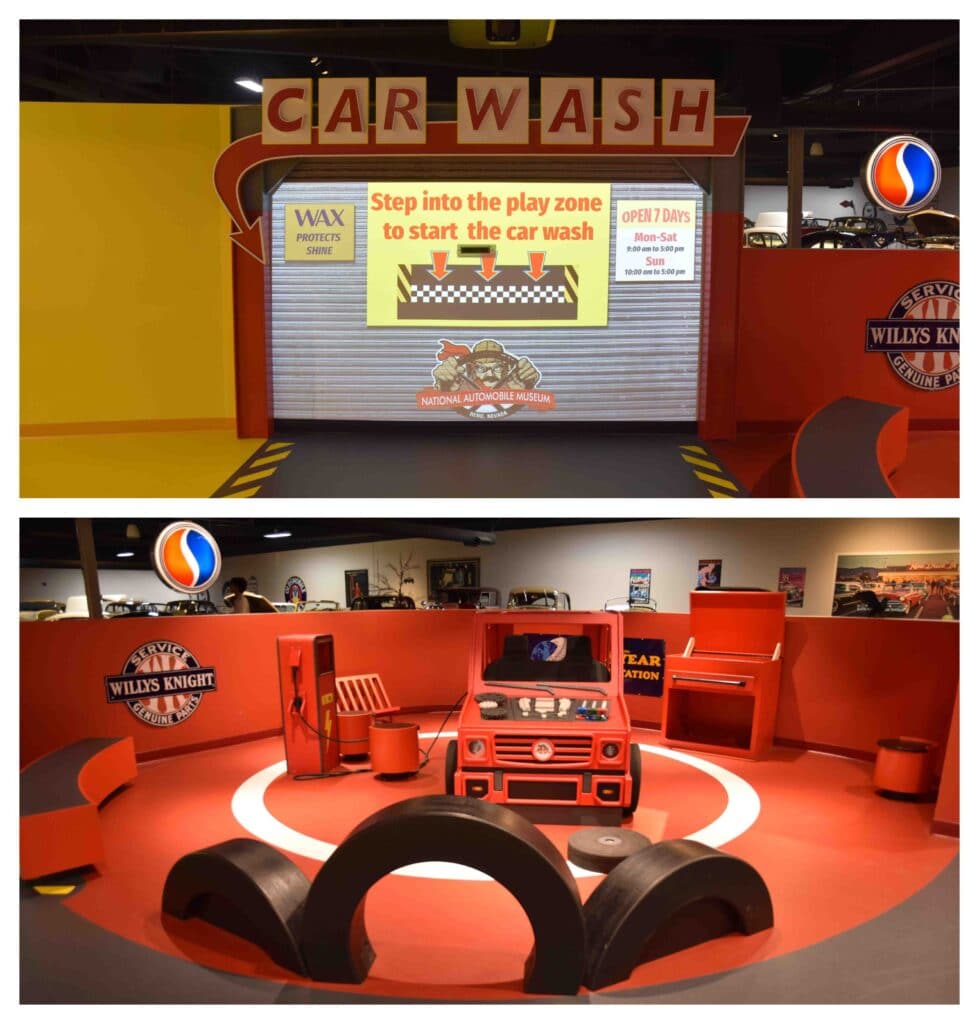
The kids’ play area includes a virtual car wash and service station-themed playground where young visitors can pretend to care for their own vehicles. Bright colors and interactive elements encourage children to explore and imagine themselves as mechanics or designers.
Watching families enjoy this space reminded us that the story of the automobile is still being written. The inventors and engineers of tomorrow may very well be the kids who first discovered their fascination with cars in places like this.
A Memorable Stop at the National Auto Museum
Our visit to the National Auto Museum left us with a deeper appreciation for the creativity that shaped early transportation. Each vehicle tells a story of experimentation, persistence, and imagination. Together, they form a timeline that shows how quickly the automobile transformed the way people experienced the world.
For travelers visiting Reno, the museum is located at 10 South Lake Street along the Truckee River. It is open daily from 9 am to 5 pm. Admission is typically around 15 dollars for adults, with discounted rates available for seniors, children, and families.
If you find yourself curious about how the automobile began its journey from curious invention to everyday companion, the National Auto Museum offers a fascinating place to explore that story. It certainly left us looking at every car on the road a little differently.


I love car museums and this one looks like a fun stop. Thanks for sharing.
It’s a great place to see cars that unique. We love these reminders of yesteryear.
I visited the National Automobile Museum last year and loved how each car told a story. Your article really captured that feeling and made me want to go back.
Thanks! We loved our visit and hope to see it again in future travels.
Those are some nice cars. I’d love to see them in person.
We were definitely surprised by the number of cars in this museum. Something we never expected to find there.
Those are some amazing cars.
We have to agree.