
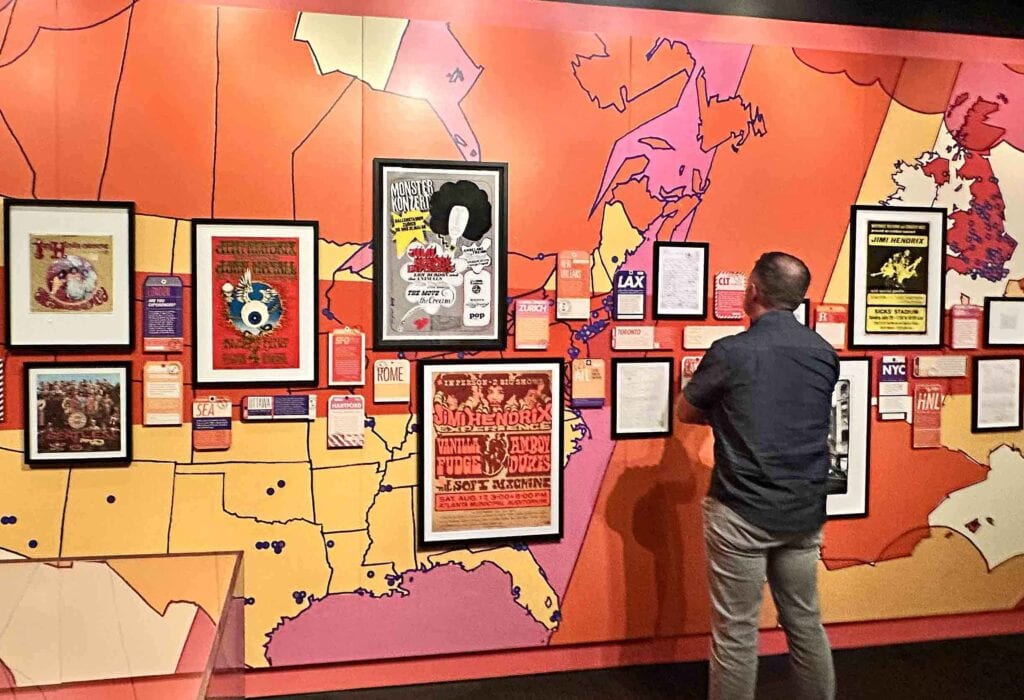
We walked through the doors already smiling, because the Museum of Pop Culture taps into something deeply personal. Music, movies, books, and stories shaped our youth, and now they shape the way we travel together. This visit felt less like checking off an attraction and more like opening a well-worn scrapbook we somehow shared before we even met.
There is something powerful about standing inside a space that celebrates imagination. Every gallery invited us to remember where we were the first time a song stopped us in our tracks or a movie made us dream bigger than our hometowns ever allowed. That is the power of pop culture, and at this museum you can immerse yourself in it.
Museum of Pop Culture Architecture
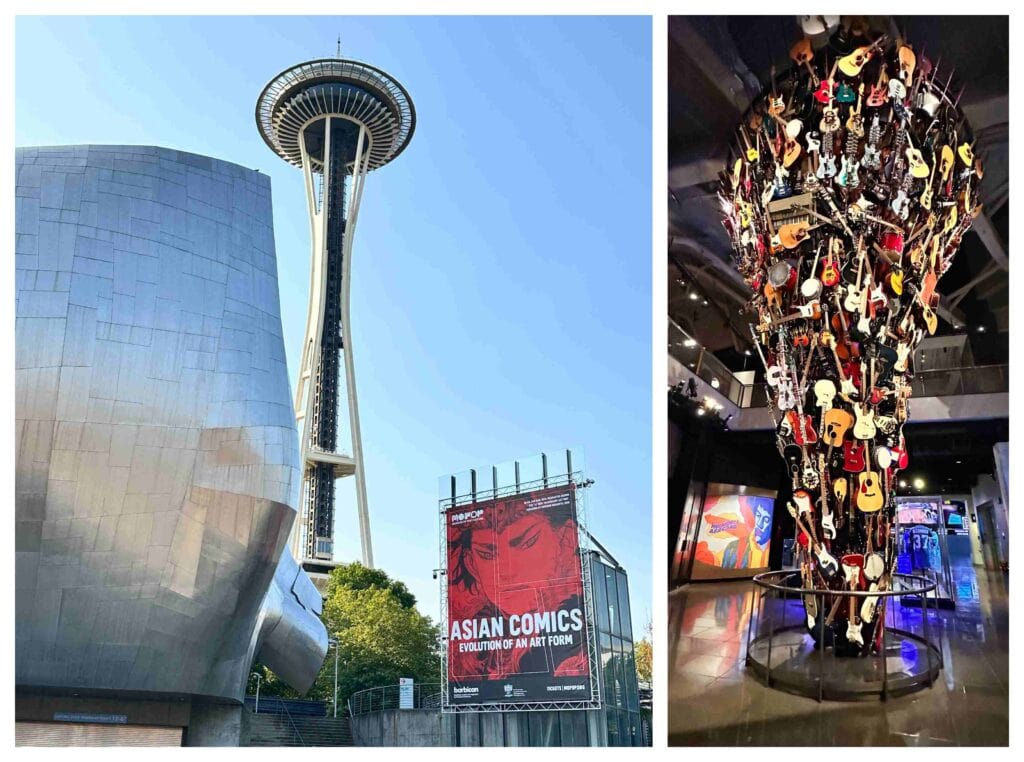
Standing just steps from the iconic Space Needle, it feels perfectly placed at the crossroads of creativity and curiosity. While exploring that iconic Seattle landmark, we spotted the museum from above. Its bold, metallic curves look alive, reflecting light in a way that feels more like a sculpture than a structure.
Inside, a tower of guitars rises dramatically through the space, echoing the city’s energy and setting the tone for everything that follows. It feels modern, playful, and unapologetically expressive, much like pop culture itself.
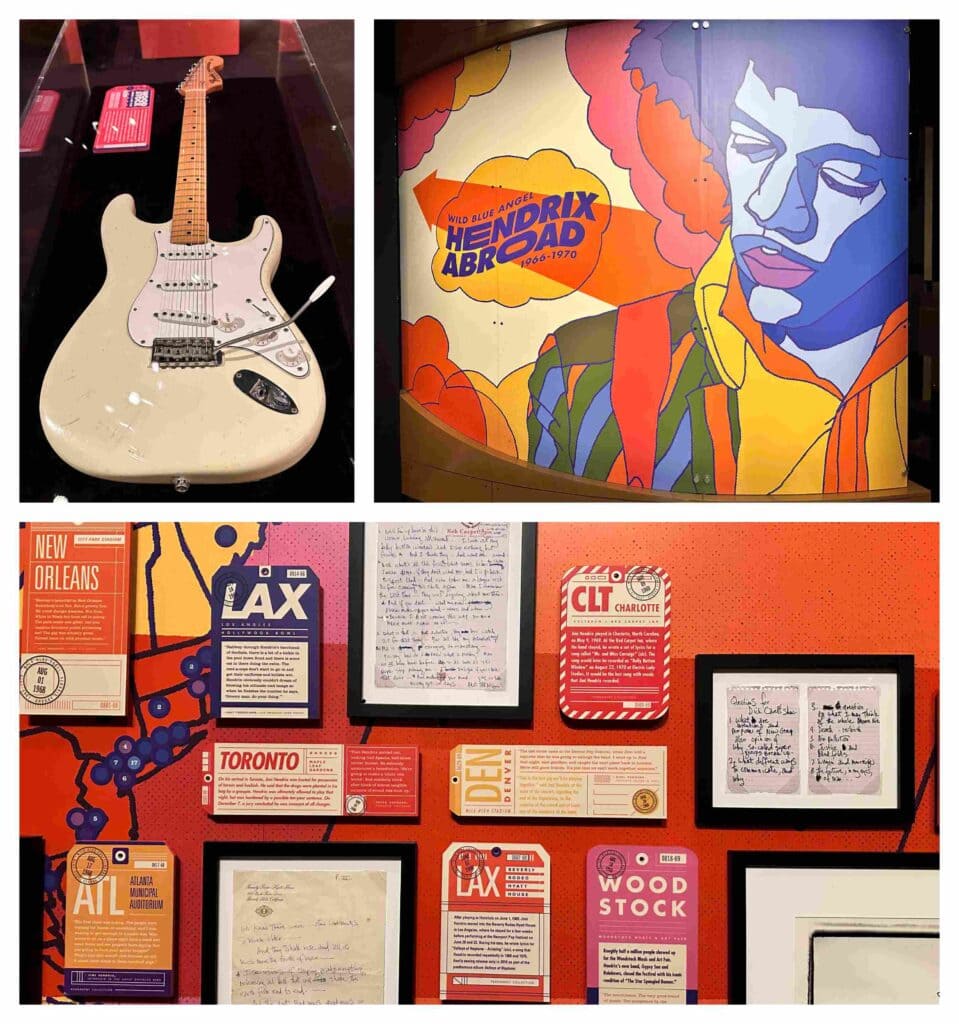
Jimi Hendrix and the Sound of a Generation
The exhibit dedicated to Jimi Hendrix drew us in quietly, then held us there longer than we expected. Learning about his journey, experimentation, and influence reminded us of how revolutionary his music truly was. The Museum of Pop Culture presents his story as both intimate and monumental.
We found ourselves talking softly, almost instinctively, as if respecting the space where a legend’s creative spirit still lingers. It was less about celebrity and more about expression, risk, and changing the sound of a generation. I grew up with siblings who blasted Hendrix tunes through the car stereo, as we cruised through town.
Pop Culture Across Time
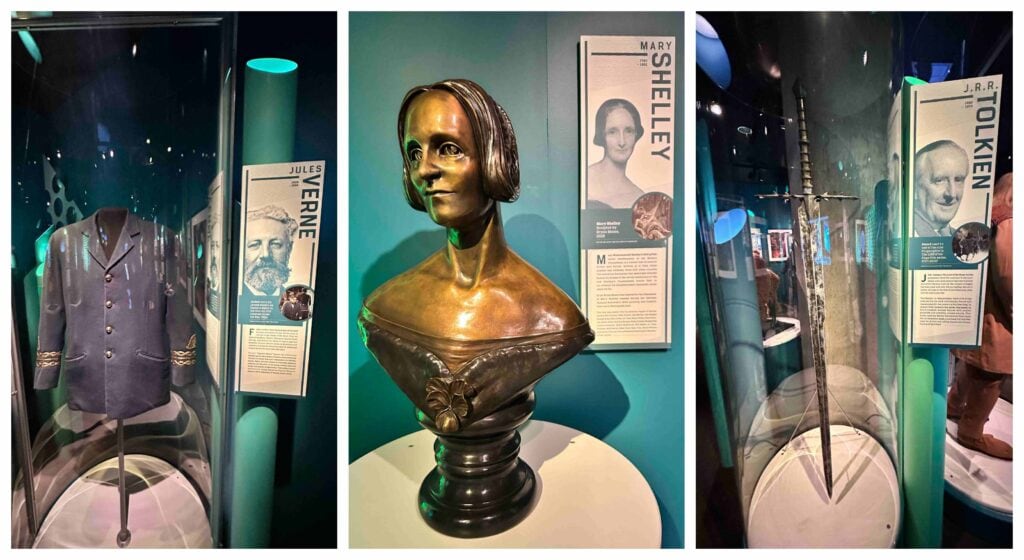
One of our favorite permanent collections focused on the Power of Pop Culture. This section felt like a bridge between centuries, showing how imagination evolves but never disappears. Seeing the influence of Mary Shelley, Jules Verne, and J.R.R. Tolkien reminded us that pop culture did not begin with movies or television. I was reminded of countless hours spent reading their classics.
Those ideas laid the groundwork for entire genres, shaping how we think about science, fantasy, and humanity itself. It was grounding to see how stories written long before our time still ripple through the entertainment we love today.
Stories With Something to Say
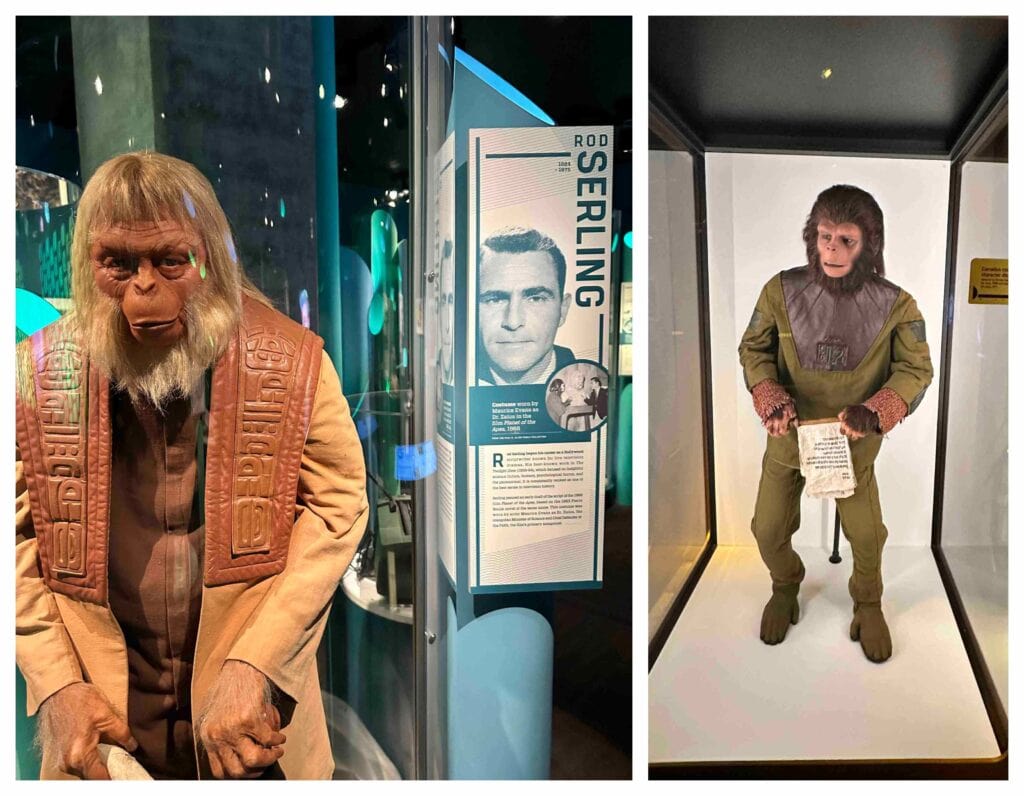
Moving forward in time, we stepped into the thoughtful world of Rod Serling and his connection to The Planet of the Apes. This was pop culture with purpose, using science fiction to ask hard questions about society, fear, and power.
We appreciated how these stories trusted their audiences to think, not just watch. It reminded us why certain films and shows stay relevant long after their release dates fade from memory. The moral tension they evoke pushes mankind towards compromise and cooperation.
A Galaxy Far Away
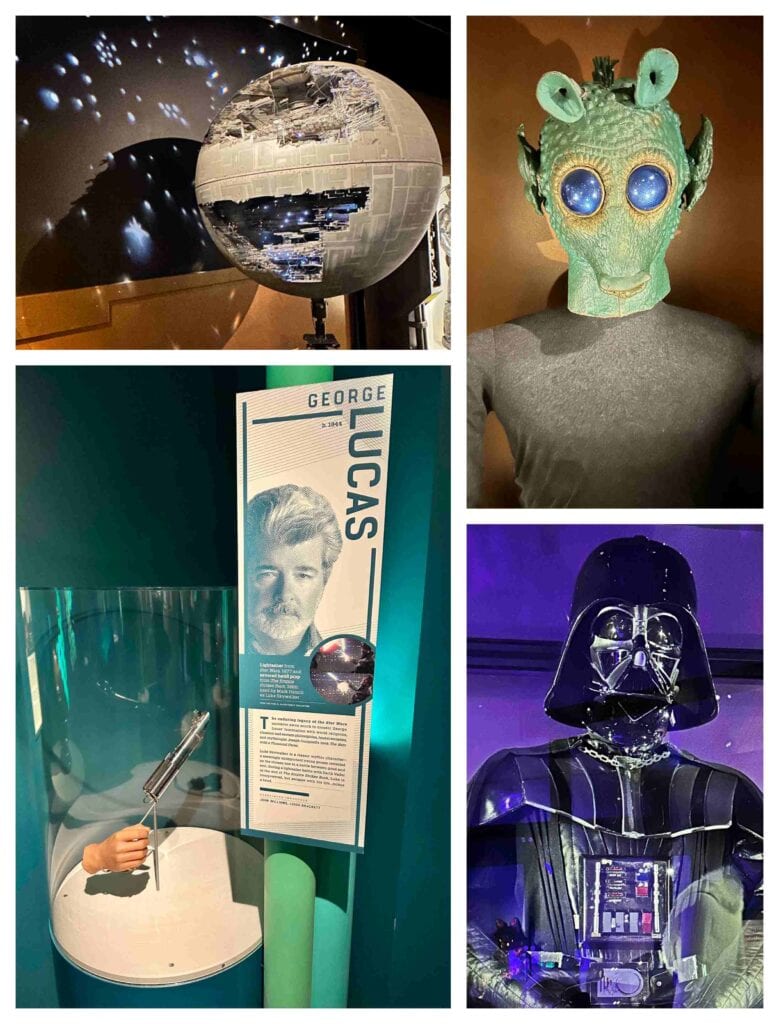
Standing among artifacts tied to George Lucas, we felt a shared sense of wonder. Star Wars was not just entertainment in our youth; it was imagination unleashed. The Museum of Pop Culture captures that sense of scale and possibility beautifully. It took us back to the days when lines formed outside theaters, in anticipation of a new episode’s release.
This collection celebrates how one story grew into a universe that continues to connect generations. We caught ourselves smiling at details we never thought we would see up close. For me, the admission price was worth it to see these classic artifacts.
Infinite Worlds
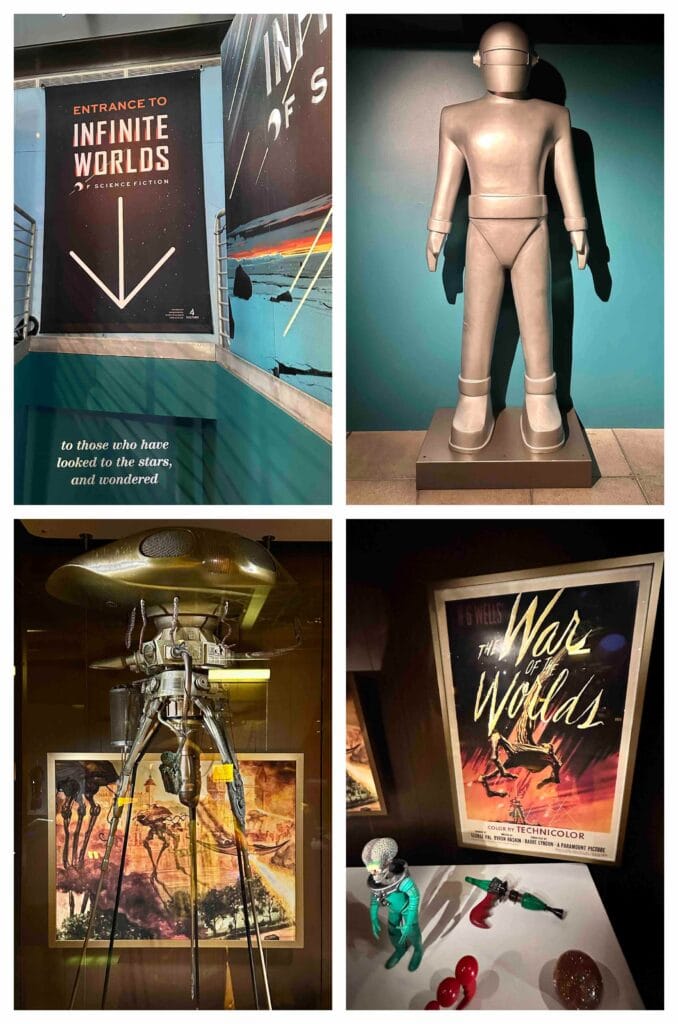
Science fiction has always been about more than shiny futures and strange visitors. In the Infinite Worlds exhibit, we were reminded just how deeply these stories once reached into everyday life. Displays tied to The Day The Earth Stood Still and The War of the Worlds showed how early science fiction did not simply entertain audiences; it unsettled them in ways that felt startlingly real.
What struck us most was the way these stories blurred the line between fiction and reality. Take the 1938 radio adaptation of The War of the Worlds, narrated by Orson Welles, as an example. It sparked widespread panic from listeners who believed an alien invasion was actually unfolding. That moment of mass hysteria speaks volumes about the power of storytelling before the age of constant media saturation.
Standing there, we talked about how those early creators tapped into very real fears of the unknown, technology, and global conflict. The Museum of Pop Culture presents this era as a reminder that science fiction has always held a mirror up to society, reflecting societal fears and even keeping people from looking away.
Magic of Making Believe
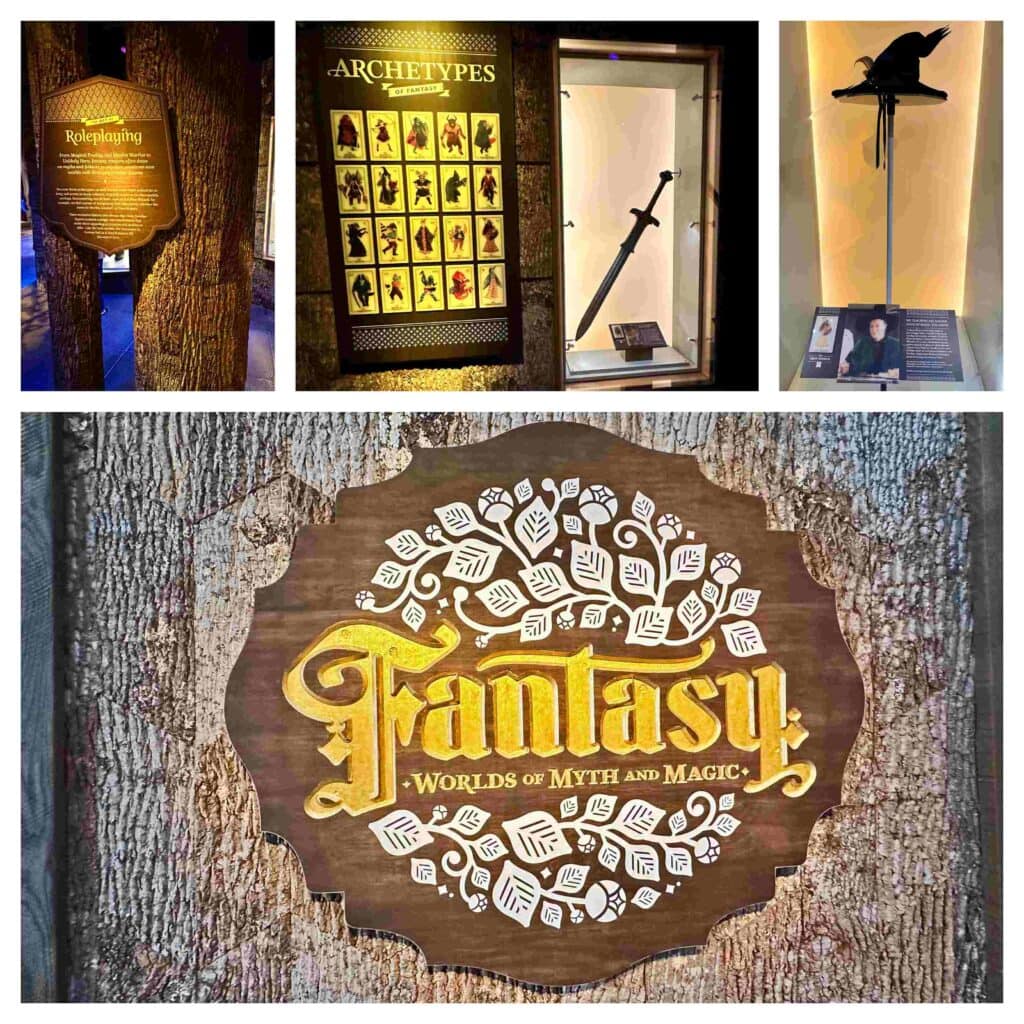
Another permanent exhibit invited us to step into the collective imagination of countless living rooms, basements, and kitchen tables. Fantasy here was not treated as escapism, but as a shared experience passed from one generation to the next. We lingered over the details of Dungeons & Dragons and its detailed rulebooks. These helped people build entire worlds using nothing more than dice, paper, and trust in each other’s creativity.
What resonated with us was how roleplaying culture permitted people to become someone else for a while. These games encouraged collaboration, storytelling, and empathy long before those ideas became buzzwords. It was easy to see how fantasy gaming quietly shaped writers, filmmakers, and designers who would later influence mainstream pop culture.
The exhibit then moved into more recent times with artifacts tied to Harry Potter. It reminds us how modern fantasy rekindled that same sense of wonder for a new generation.
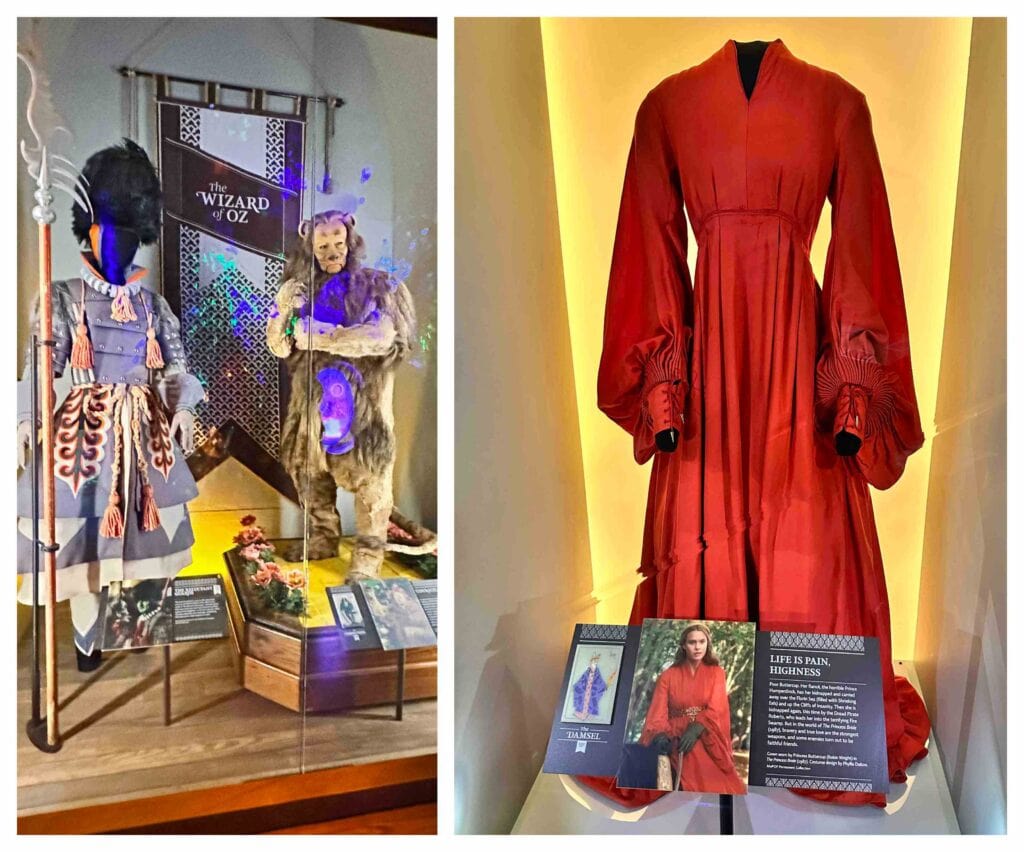
Kansas, Oz, and Family Favorites
We continued exploring the displays packed with fond memories. Seeing The Wizard of Oz connected us back to Kansas and the way stories travel far beyond their origins. This section hit close to home. It reminded us how place and imagination intertwine.
A display featuring The Princess Bride brought back memories of watching with our kids. I’m sure we aren’t the only family that shouts out lines from this classic movie. The Museum of Pop Culture excels at creating moments where personal history and shared culture overlap in the best way.
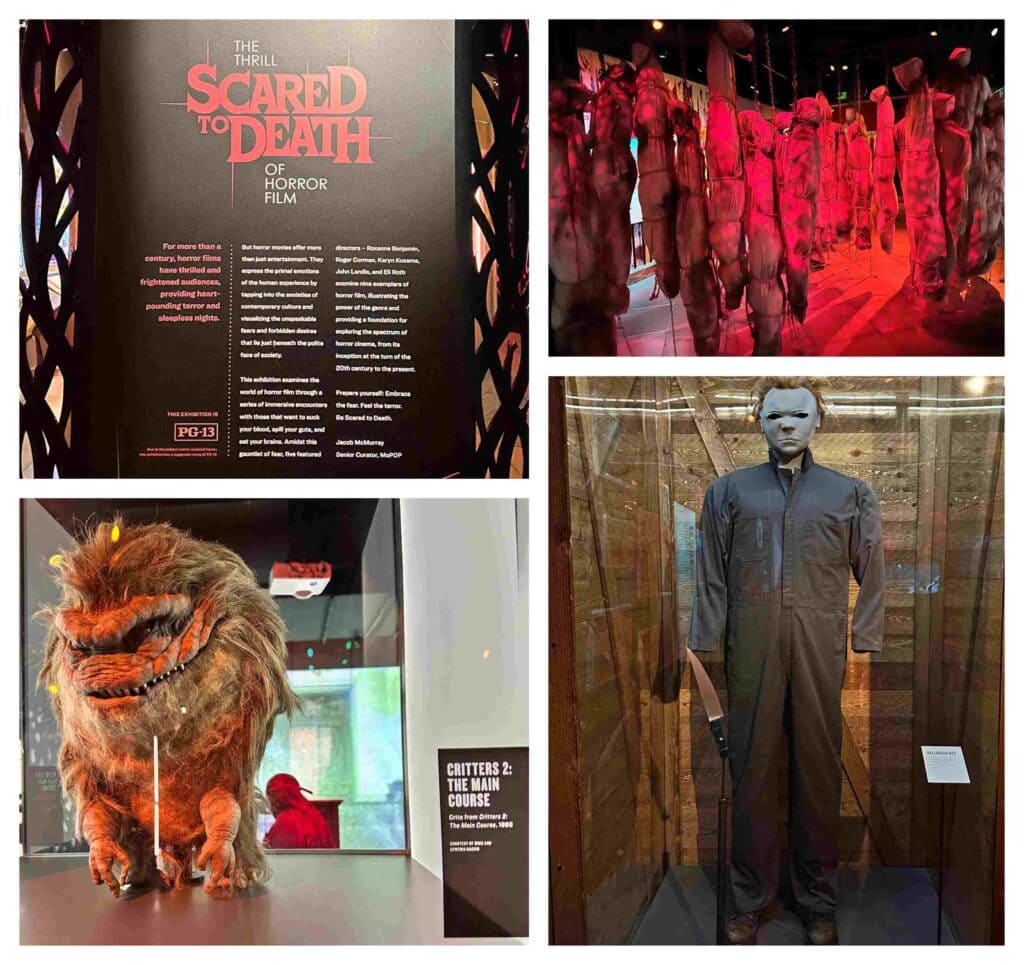
The Thrill of Fear
I expected the horror and thriller exhibits would be a challenge for Crystal. She is not one who willingly scares herself. I’ve always been a fan, if only when she isn’t in the vicinity. From suspense to outright terror, these films reveal how fear can be both entertainment and reflection. Fear has always been one of pop culture’s most effective storytellers.
These films did more than make audiences jump in their seats. They reflected the anxieties of their time, with threats lurking just beneath the surface of everyday life. The exhibit showed how horror and thrillers evolve alongside society, adapting to new worries while using familiar techniques to keep us leaning forward in our seats. Standing among these displays, we were reminded that being scared was never just about terror. It was about connection, release, and the strange comfort of knowing we were all afraid of the same things at the same time.
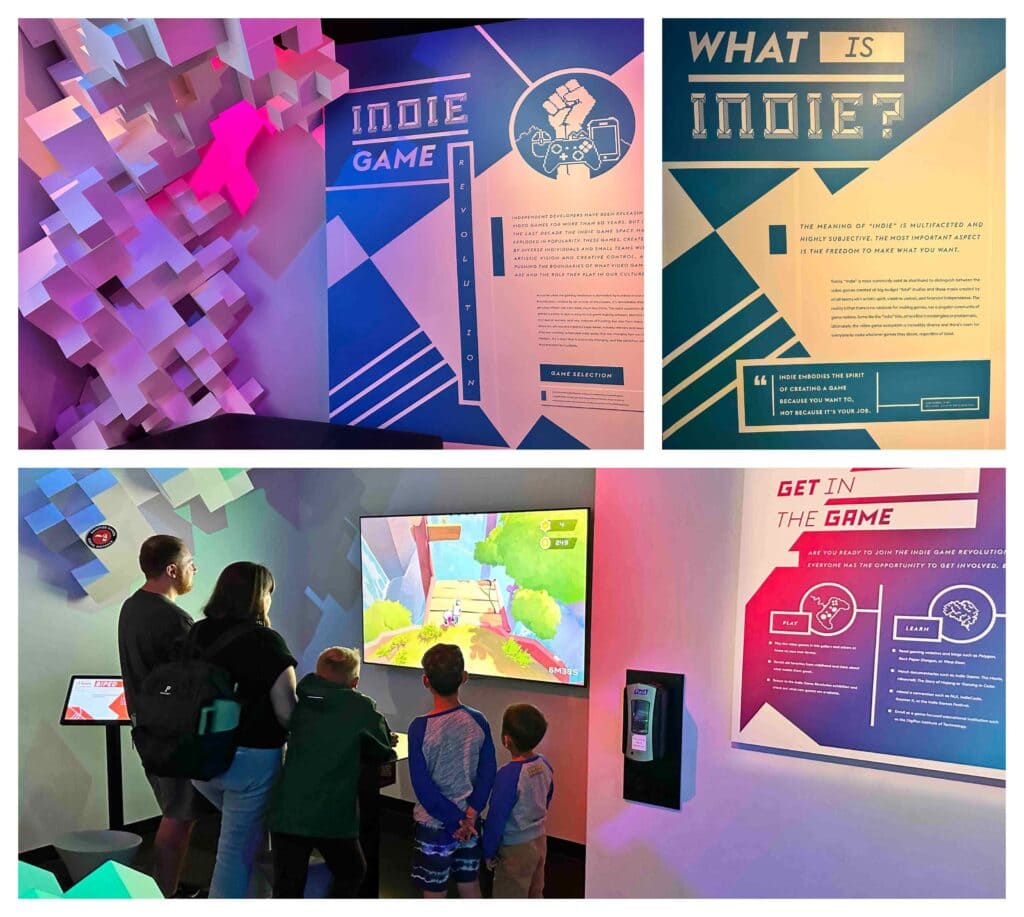
Indie Gaming
This rotating exhibit pulled us into a newer chapter of pop culture, one that feels scrappier and more personal. Indie gaming grew out of a desire to create outside the boundaries of big studios and massive budgets. Small teams, and sometimes single developers, began using accessible tools to tell stories that might never have survived a traditional boardroom pitch.
What fascinated us was how these games often prioritize emotion, experimentation, and narrative over spectacle. Many were born from personal experiences or simple what-if ideas, proving that innovation does not always require cutting-edge graphics. The exhibit traced how indie games carved out space for voices that were missing from mainstream gaming.
Hands-on stations made it easy to see why this movement matters. Playing these games reminded us that pop culture is still evolving in real time. Curiosity and passion, rather than formulas, are driving it. These are some of the next generation of storytellers.

Wrapping Up Our Visit
The Museum of Pop Culture is located at 325 5th Avenue North in Seattle. It sits adjacent to the Space Needle and within easy walking distance of several downtown highlights. Its location makes it a natural anchor for a day of exploring the city. It is typically open daily, with standard hours running from 10:00 AM to 5:00 PM. Because hours can shift for holidays or special events, it is smart to confirm the schedule before you go.
General admission usually falls around $30 for adults, with discounted rates for youth, seniors, and students. Younger children are often admitted at a lower price, and pricing can vary slightly with special exhibitions. If this museum sounds like your kind of day, sharing this article on social media is a great way to pass along the inspiration to friends who love pop culture as much as you do.



Howdy! This post couldn’t be written any better! Reading this post reminds me of my old roommate! He always kept talking about this. I will forward this article to him. Fairly certain he will have a good read. Thanks for sharing!
So happy to hear this. We have visited this museum a couple of times and found it still intriguing.