
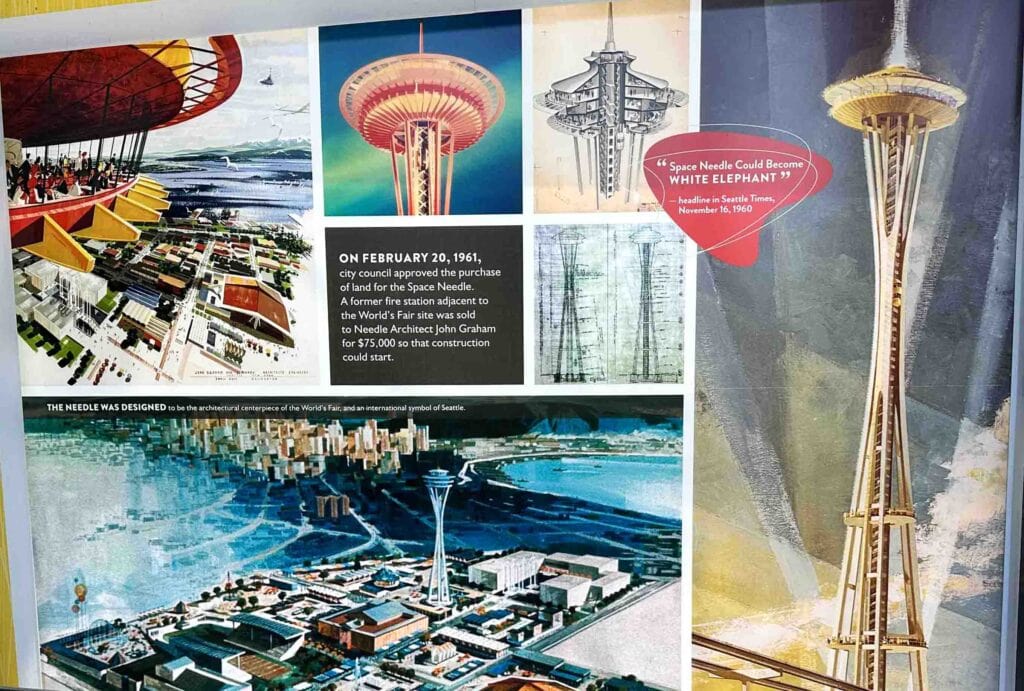
Visiting the Space Needle is like stepping into Seattle’s story. Standing at its base, we got a sense that this was never meant to be just a tower. It was meant to be a promise. Long before elevators and observation decks, the idea lived as a sketch of optimism. It came at a time when cities wanted to show the future rather than fear it.
Seattle in the late 1950s was restless in a good way. Industry was growing, confidence was rising, and there was a shared belief that progress could be both beautiful and practical.
When Seattle First Heard the Pitch
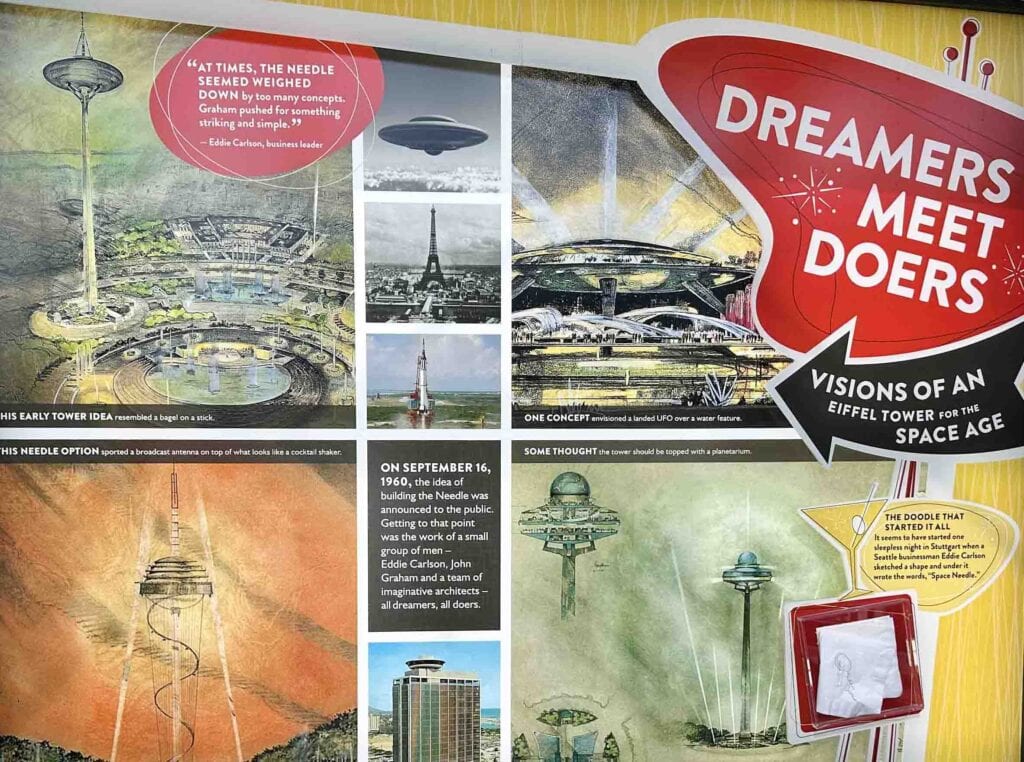
The proposal landed in a city already buzzing with ambition, but it was the early design concepts that truly stirred conversation. At a time when Americans were captivated by space travel and the mystery of flying saucers, the Space Needle’s shape felt familiar in an unexpected way. Its saucer-like top echoed the popular imagination of UFOs, space stations, and a future that seemed within reach.
This was the height of the Space Age, when magazines were filled with illustrations of orbital cities and sleek aircraft from tomorrow. The Needle’s designers leaned into that optimism, creating a form that suggested motion, curiosity, and lift. It looked less like a traditional tower and more like something that might have just touched down.
Public reaction followed those cultural currents. Some residents questioned whether such a futuristic shape fit the character of Seattle. Others embraced it as a bold declaration that the city was thinking beyond the horizon. The debate itself revealed something important. Seattle was ready to imagine itself as part of the future being discussed on a national scale.
Breaking Ground With Fingers Crossed
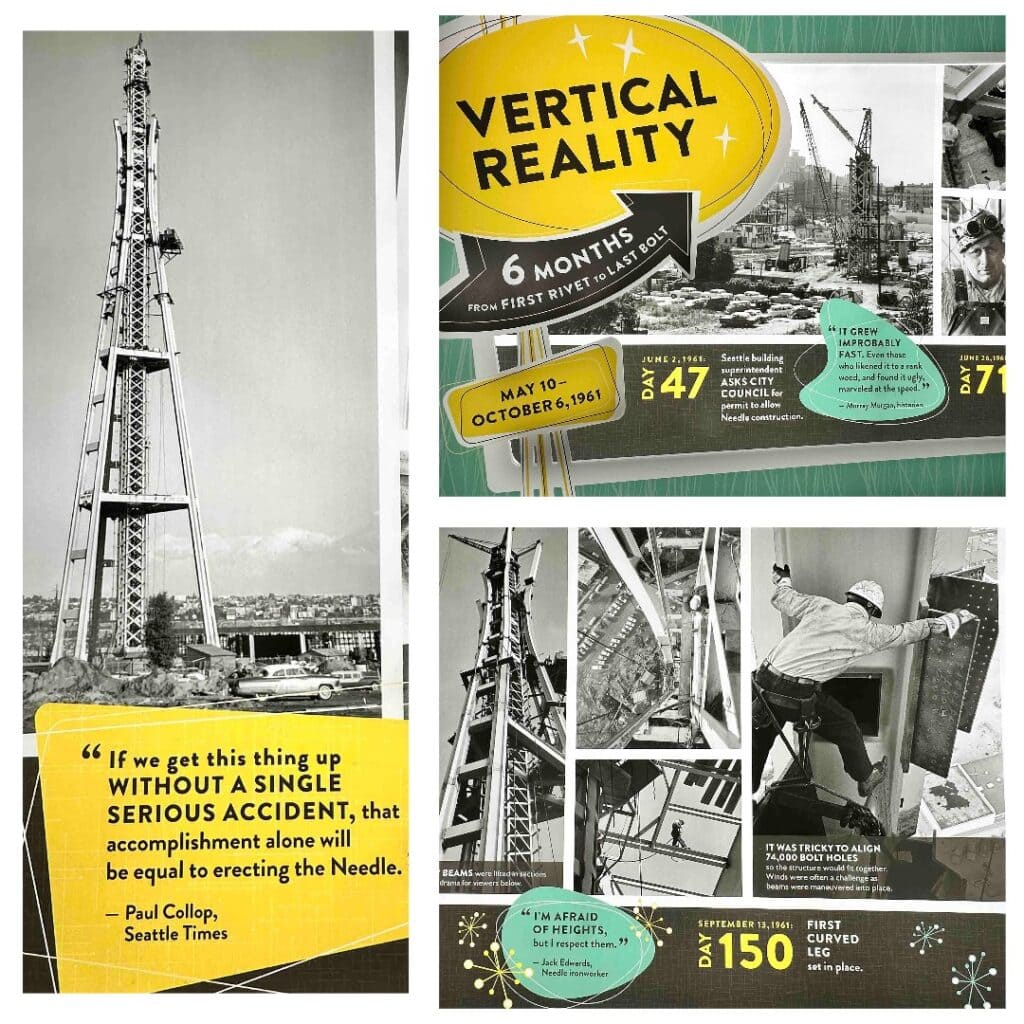
Construction began with equal parts confidence and concern. Engineers faced unfamiliar challenges, especially regarding stability and balance. The goal was clear. Build something daring, and build it safely.
There was genuine hope that the project could remain accident-free, a rare aspiration for such an ambitious structure. Every poured foundation and rising column carried not just steel and concrete, but the trust of a city watching closely. If completed in time, this would be the crowning jewel of the 1962 Seattle World’s Fair.
Racing the Calendar and the Clouds
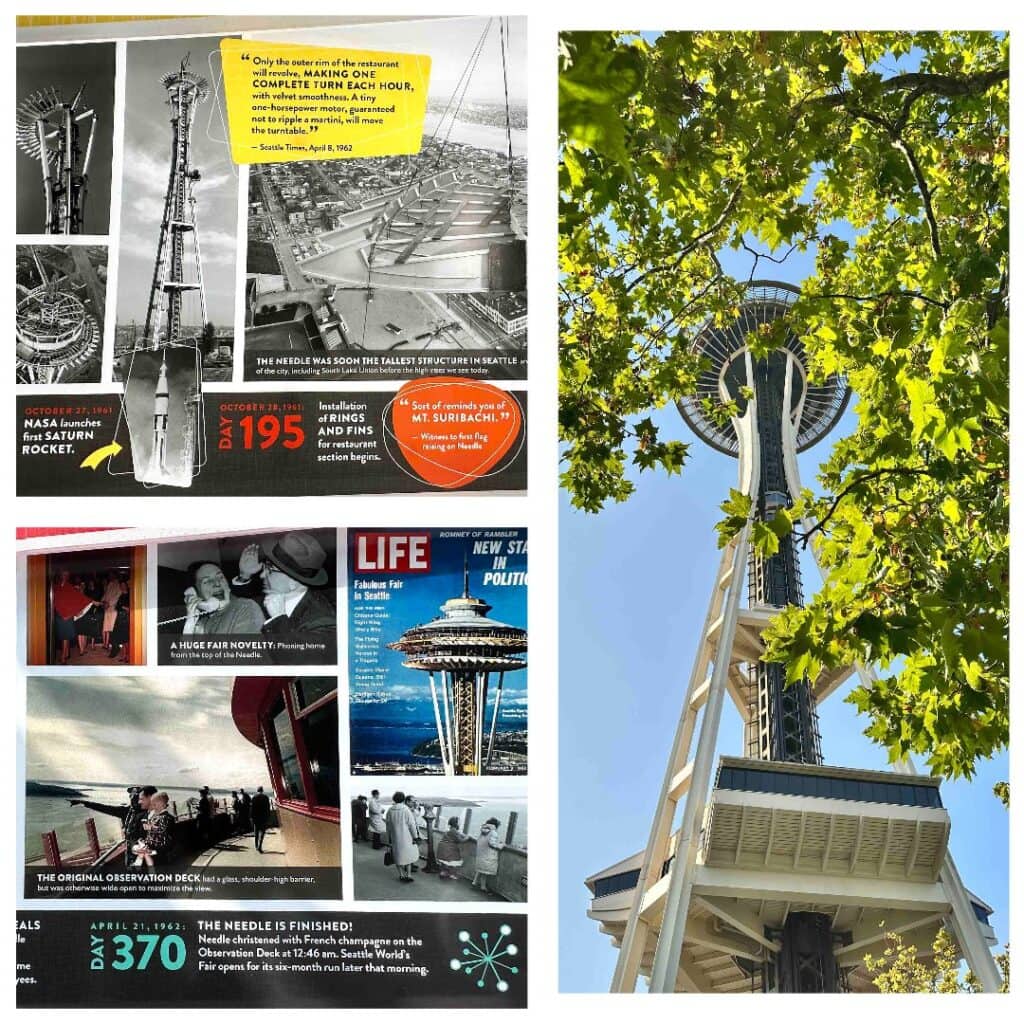
As the structure climbed higher, the pressure mounted. Deadlines loomed, and the World’s Fair clock ticked loudly. Engineers refined solutions on the fly, solving problems that only appeared once the tower reached new heights.
From afar, residents could watch progress day by day. The skyline slowly changed, and with it, public perception shifted from skepticism to pride. The tower no longer felt like a gamble. It felt inevitable.
A Fair, a Future, and a Global Gaze
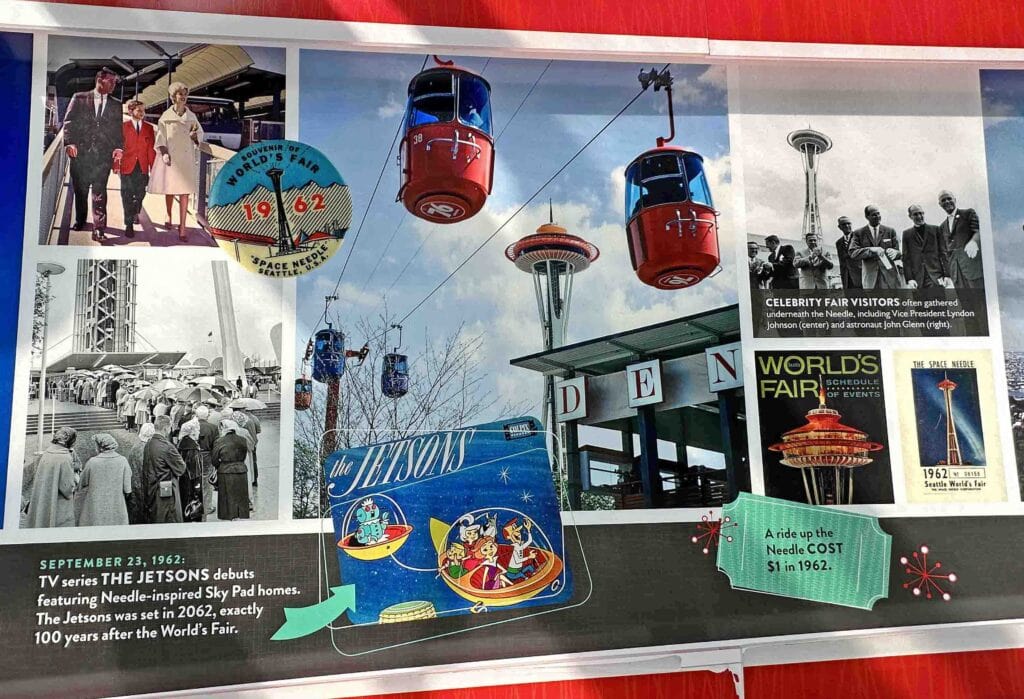
By 1962, the Space Needle stood ready as the World’s Fair opened its gates. It was no longer an experiment but a finished statement. Rather than overpowering the fairgrounds, it gave them a sense of direction. Visitors arriving from across the country and around the world quickly understood that this tower was meant to be experienced, not merely observed from afar.
Fairgoers lined up eagerly, many seeing such height and design for the first time. The elevators, the views, and the sensation of floating above the city became part of the fair’s shared memory. People talked about the Needle as much as the exhibits themselves, treating it as both attraction and landmark.
What surprised many planners was how naturally visitors accepted the structure. Instead of feeling futuristic, cold, or distant, it felt welcoming and optimistic. The Space Needle became a place where strangers lingered together. Many quietly absorbed the idea that the future could be hopeful and human at the same time.
By the fair’s close, the question was no longer whether the Space Needle belonged. The visitors had answered that for the city.
Views From Visiting the Space Needle
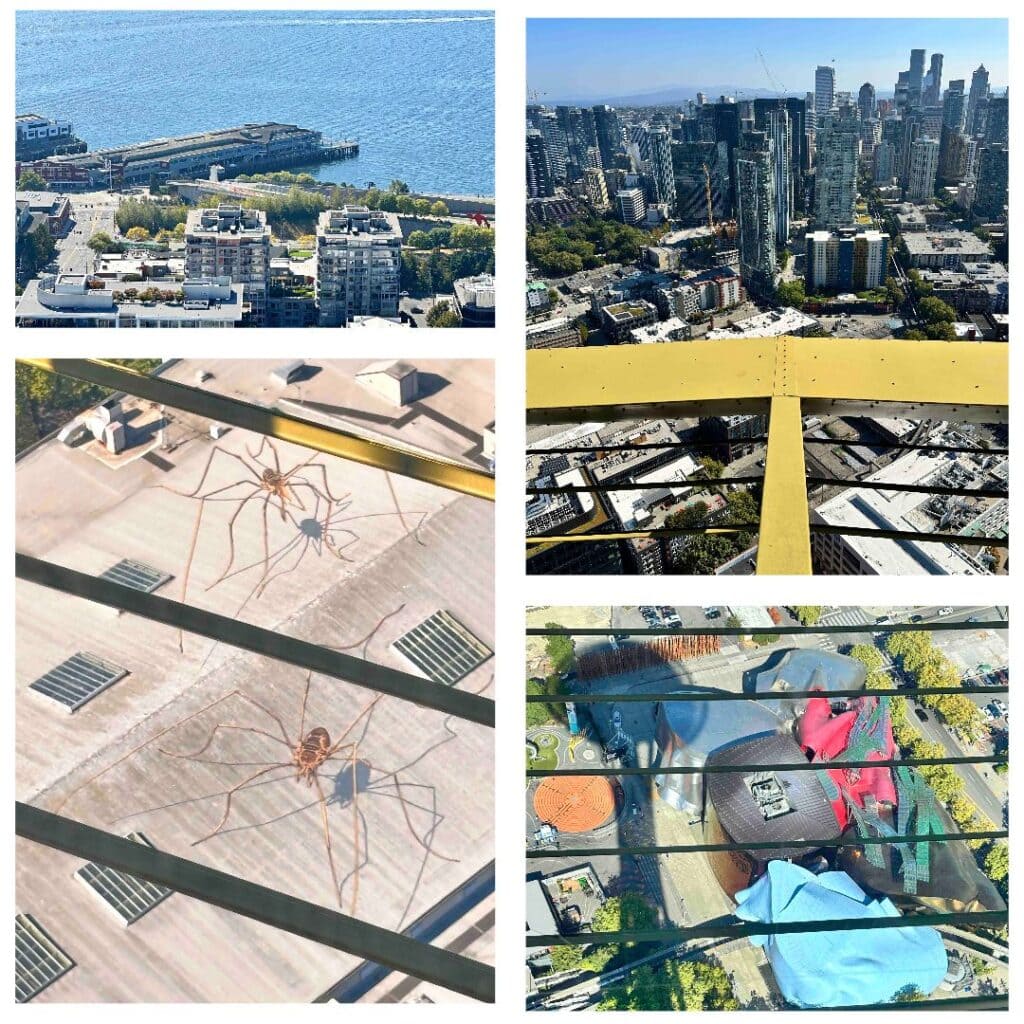
From above, Seattle unfolds like a living map. Skyscrapers rise in measured clusters, their glass catching light that shifts with the clouds. Beyond them, open stretches of water carve calm paths through the city. It reminded us how deeply Seattle is shaped by its relationship with the sea.
What I noticed most was how naturally the landmarks revealed themselves. Neighborhoods, green spaces, and familiar gathering places appeared without announcement. These days, visiting the Space Needle feels less like observing a city and more like being introduced to it, one thoughtful layer at a time.
Planning a Reflective Visit
Visiting the Space Needle is easy to fold into a Seattle itinerary. Hours typically run from late morning into the evening, with extended hours during peak seasons. Admission varies by experience, with observation deck access as the core offering and optional enhancements available.
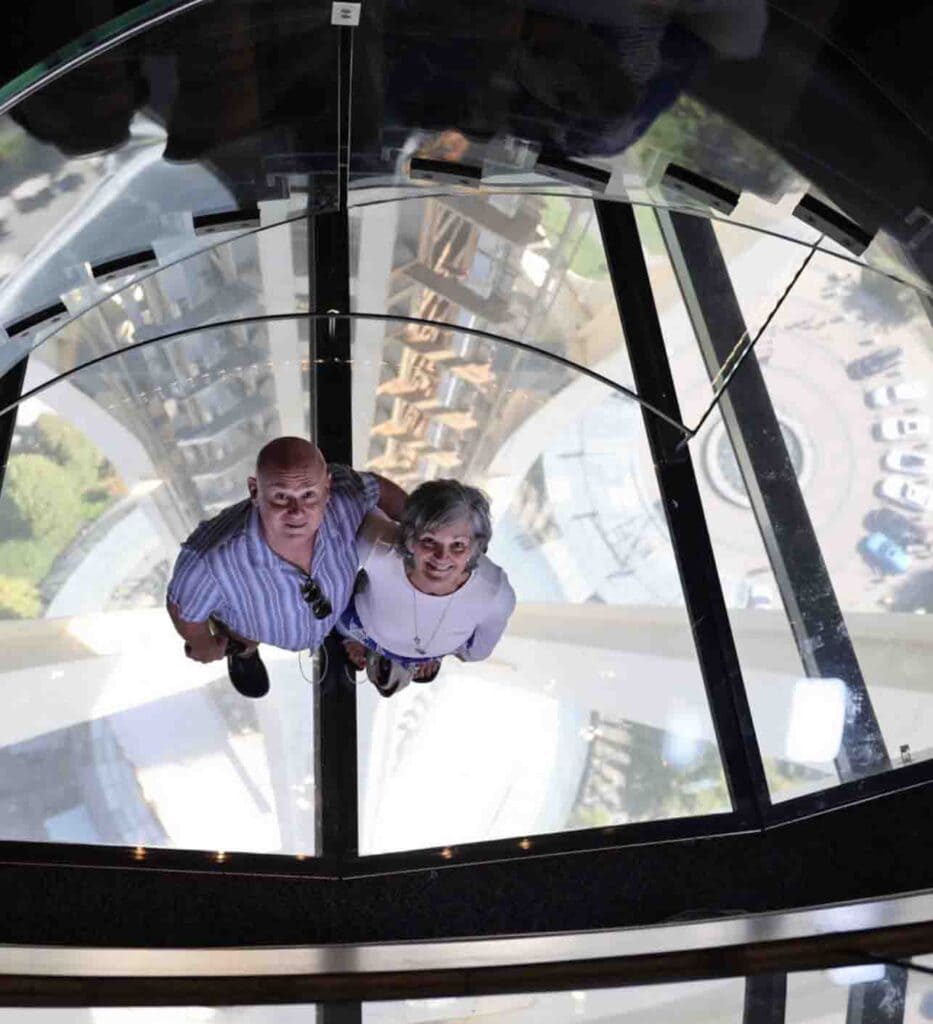
We recommend an unhurried visit that provides time to absorb both the structure and the story it tells. Just as the idea once rose slowly in the public imagination, the experience is best savored at a leisurely pace, allowing that original spark of optimism to linger.


This is a great article no doubt about it, I just started following you and I enjoyed reading this piece. Do you post often? Thank you
Thanks for following along with our adventures. I try to post new content at least once per week. We hope you’ll come back often.