Dust drifted across the prairie as freight wagons creaked westward along the Santa Fe Trail, carrying supplies through a landscape filled with uncertainty. Soldiers scanned the horizon for danger while traders pushed deeper into the frontier. Today, Fort Larned National Historic Site preserves those echoes of the American West with remarkable clarity. During Memorial Day weekend, we stopped at Fort Larned while driving home from Dodge City. We quickly realized this was far more than another historic landmark.
Located near Larned, Kansas, the site is operated by the National Park Service and contains one of the best-preserved frontier military posts in the country. Unlike some reconstructed western forts, nearly all of the original sandstone buildings remain standing. Walking through the grounds felt less like visiting a museum and more like stepping directly into the complicated history of the Great Plains.
Before Borders Changed the Plains
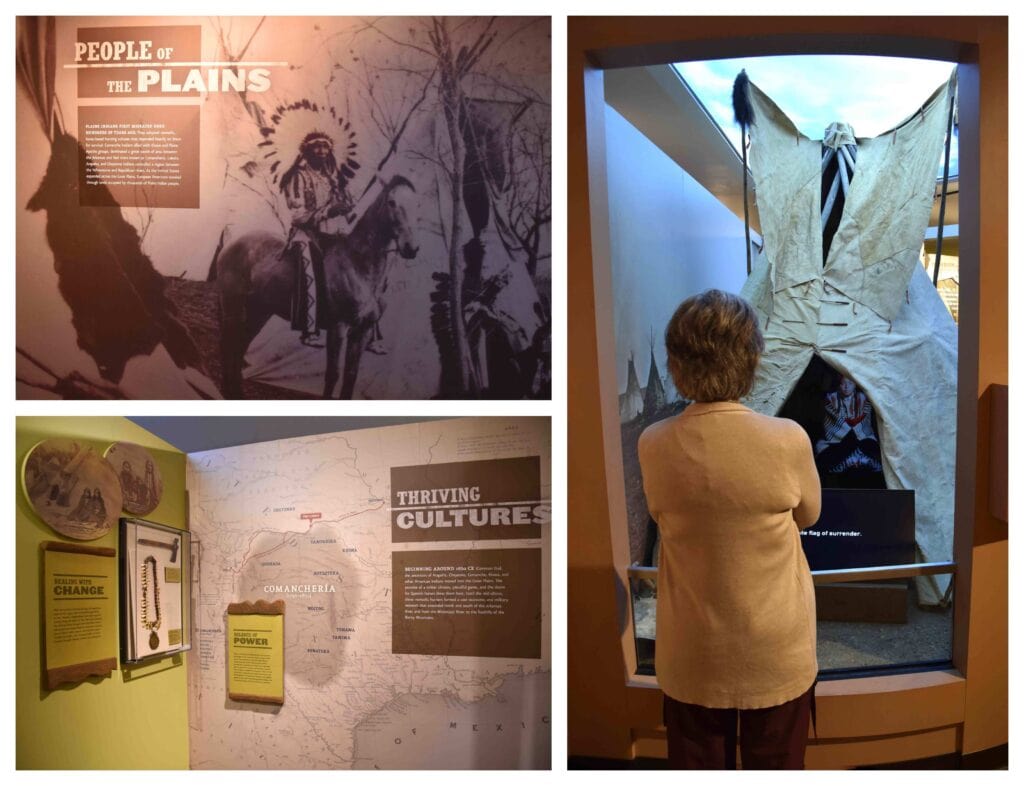
Long before American expansion reached Kansas, Indigenous tribes thrived across the plains surrounding present-day Fort Larned. The region was home to native people, including the Kiowa, Comanche, Cheyenne, Arapaho, Pawnee, and Apache. Each has deep cultural ties to the land. These communities followed seasonal migrations, hunted buffalo, traded goods, and maintained established routes across the prairie centuries before settlers arrived.
The Louisiana Purchase in 1803 dramatically reshaped the region’s future, even though Indigenous nations had long controlled and understood these lands. Expanding trade and military activity soon followed, bringing increasing pressure onto the plains. The Santa Fe Trail eventually cut through territory that had long been part of Indigenous life and commerce, setting the stage for both cooperation and conflict.
The Dangerous Importance of the Santa Fe Trail
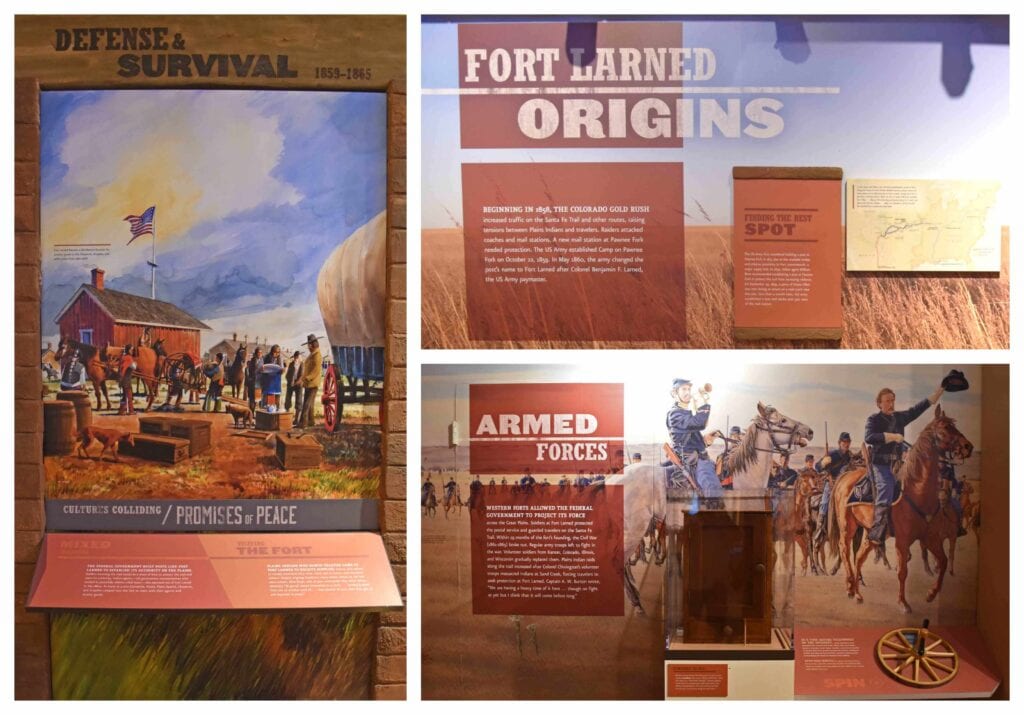
By the 1850s, the Santa Fe Trail had become one of the busiest commercial routes in the American West. Freight wagons carried manufactured goods southwest toward New Mexico. They would return east with silver, wool, and other valuable products. As wagon traffic increased, so did concerns about attacks on travelers and supply trains.
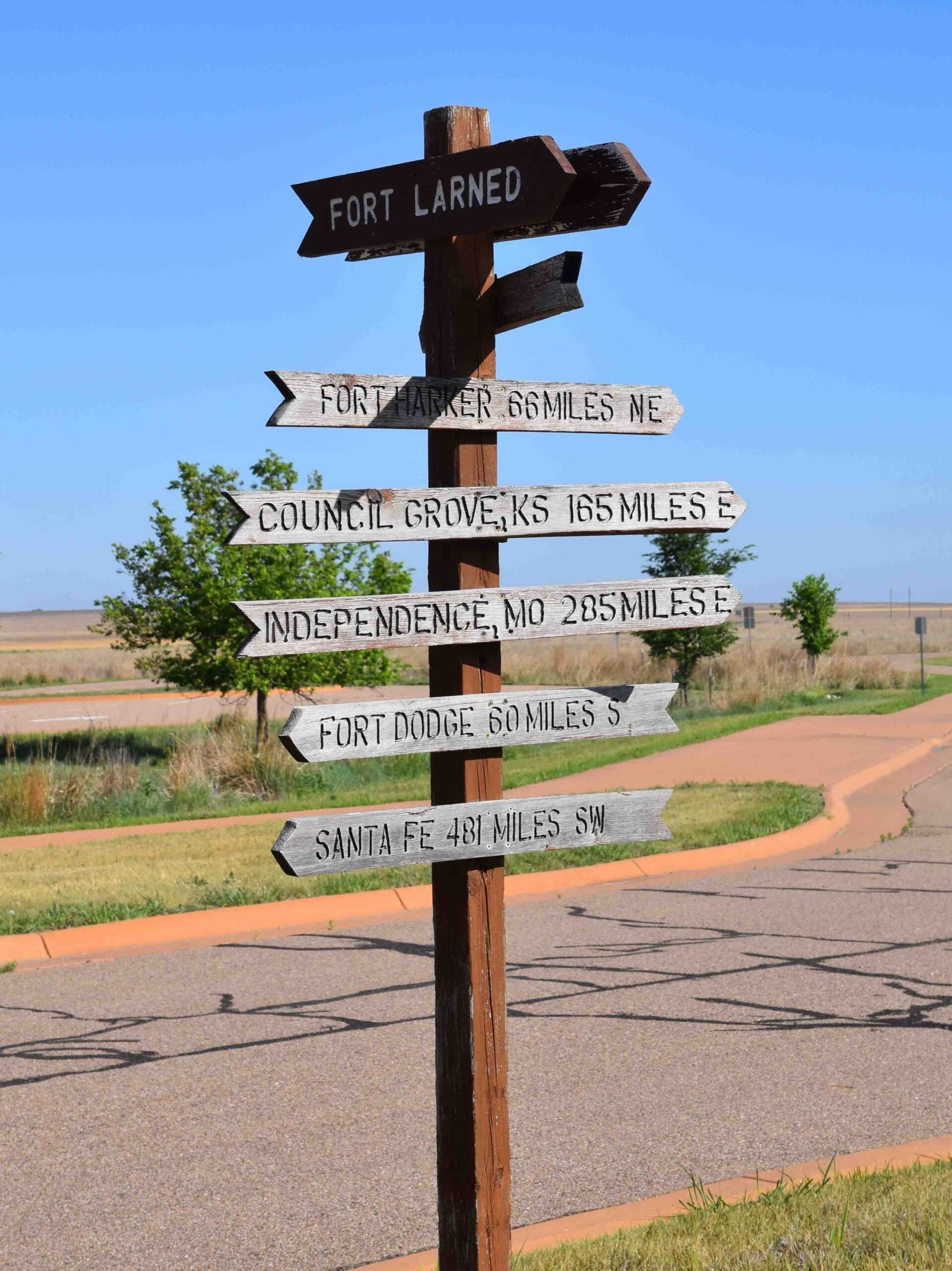
The U.S. Army established Fort Larned in 1859 to help protect this vital route. Originally known as Camp on Pawnee Fork, the fort sat close to the Arkansas River and near one of the trail’s busiest crossings. Soldiers stationed here escorted wagon trains, guarded mail routes, and attempted to maintain peace. This was often difficult for traders, settlers, and Indigenous tribes whose lives were rapidly changing due to westward expansion.
Compared to Fort Scott, which developed closer to settled communities in eastern Kansas, this outpost felt much more isolated and directly connected to the rugged realities of frontier travel.
A Fort Without Walls
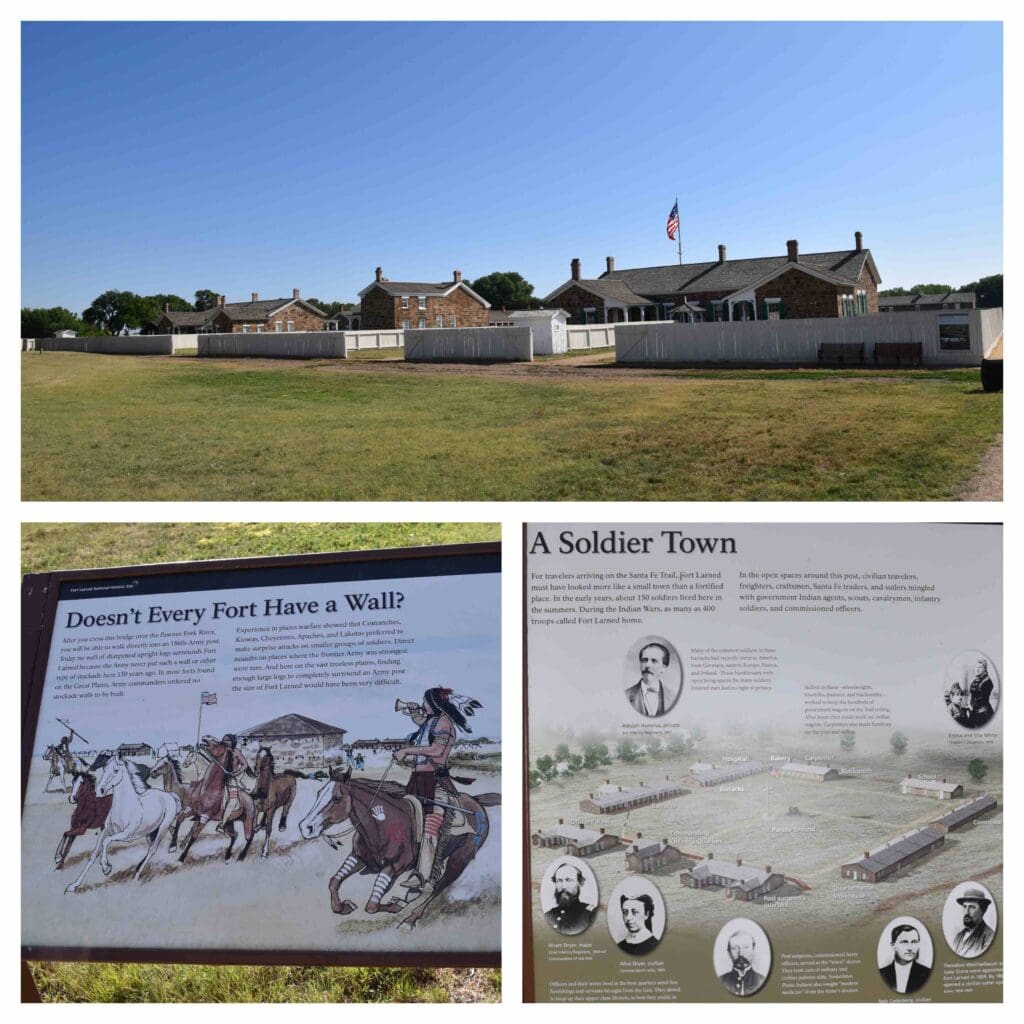
One of the most surprising details about the fort is its open design. Unlike the stereotypical Western forts seen in movies, there were no towering wooden walls surrounding the buildings. At first glance, the layout almost feels vulnerable against the endless prairie.
The military intentionally avoided building walls because they feared attackers could use them as cover during sneak assaults. The lack of nearby timber also made large wooden fortifications impractical. Instead, the Army relied on open sightlines across the plains and strategically placed buildings to defend the post.
Standing in the center of the parade grounds, we could easily imagine how exposed soldiers must have felt while stationed so far from major settlements. The openness created a constant reminder that the frontier could change in an instant.
Sandstone Buildings That Refused to Disappear
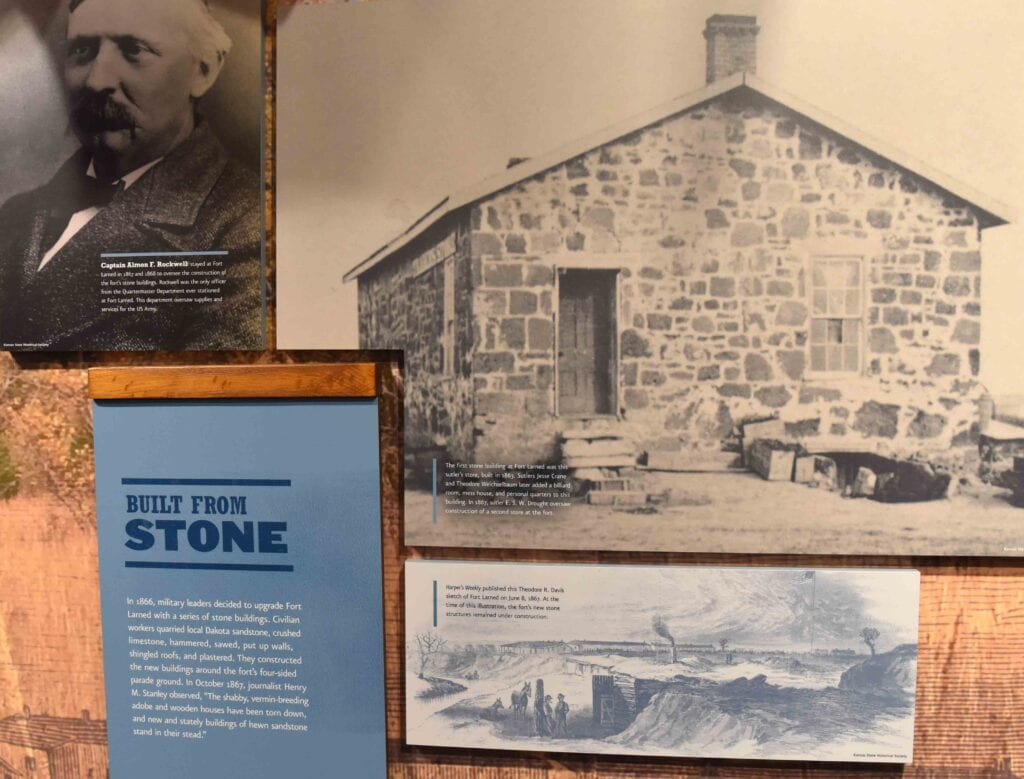
Early structures at the fort were built from adobe and temporary materials, but harsh weather quickly revealed the need for something stronger. Eventually, workers quarried local sandstone to create the buildings that still stand today.
The resulting architecture gives the site a remarkably authentic appearance. Officers’ quarters, barracks, the commissary, and the guardhouse all retain much of their original character. Walking through the rooms offered a clearer understanding of how permanent the Army hoped this post would become.
The sandstone also helped preserve history in a way many frontier forts could not. Fires, weather, and neglect destroyed countless military outposts across the West, but the sturdy construction here allowed future generations to experience a rare surviving example of frontier military engineering.
Daily Life on a Remote Military Outpost
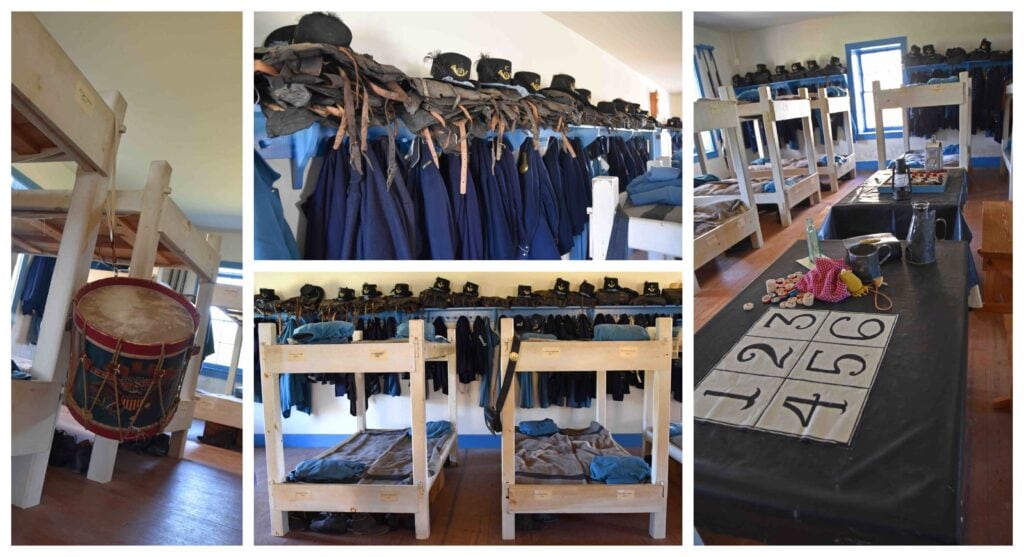
Life at Fort Larned could be exhausting, repetitive, and isolated. Soldiers spent their days performing drills, maintaining equipment, standing guard duty, caring for horses, and escorting wagon trains along the trail. Harsh weather often made conditions even more difficult.
Meals were simple and heavily dependent on available supplies. Salt pork, beans, bread, and coffee appeared regularly on military menus. During periods of shortage, fresh food became difficult to obtain. Soldiers also faced diseases, boredom, and the emotional strain of serving far from home.
We enjoyed seeing how interpreters demonstrated these daily routines during our visit. A conversation with the fort’s baker produced an unexpected factoid. The bread they baked had to sit for 24 to 48 hours before it was consumed. The Army considered it perilous to eat fresh bread, fearing what the yeast might do to the soldiers.
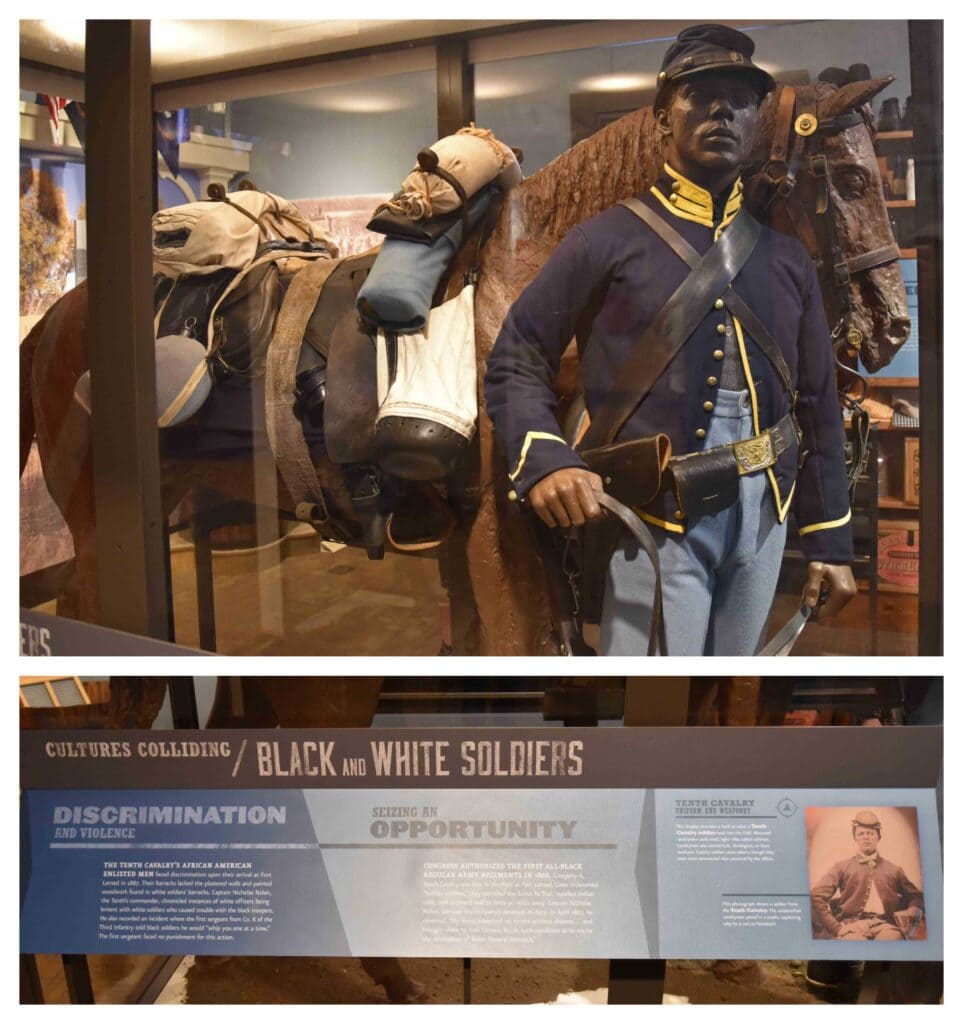
The Buffalo Soldiers of Fort Larned
Following the Civil War, African American regiments known as Buffalo Soldiers served throughout the western frontier, including at Fort Larned. The nickname was reportedly given by Indigenous tribes who admired the soldiers’ courage and resilience.
These regiments played a major role in protecting mail routes, escorting travelers, and helping enforce federal policies across the plains. Despite their military service, Buffalo Soldiers endured discrimination, unequal treatment, and difficult assignments within the segregated Army.
Their presence at the fort represents an important chapter in both military and African American history. Learning about their contributions added another layer to the site beyond the familiar stories often associated with Western expansion.
The preserved buildings and interpretive displays help ensure their service remains part of the broader conversation surrounding frontier history.
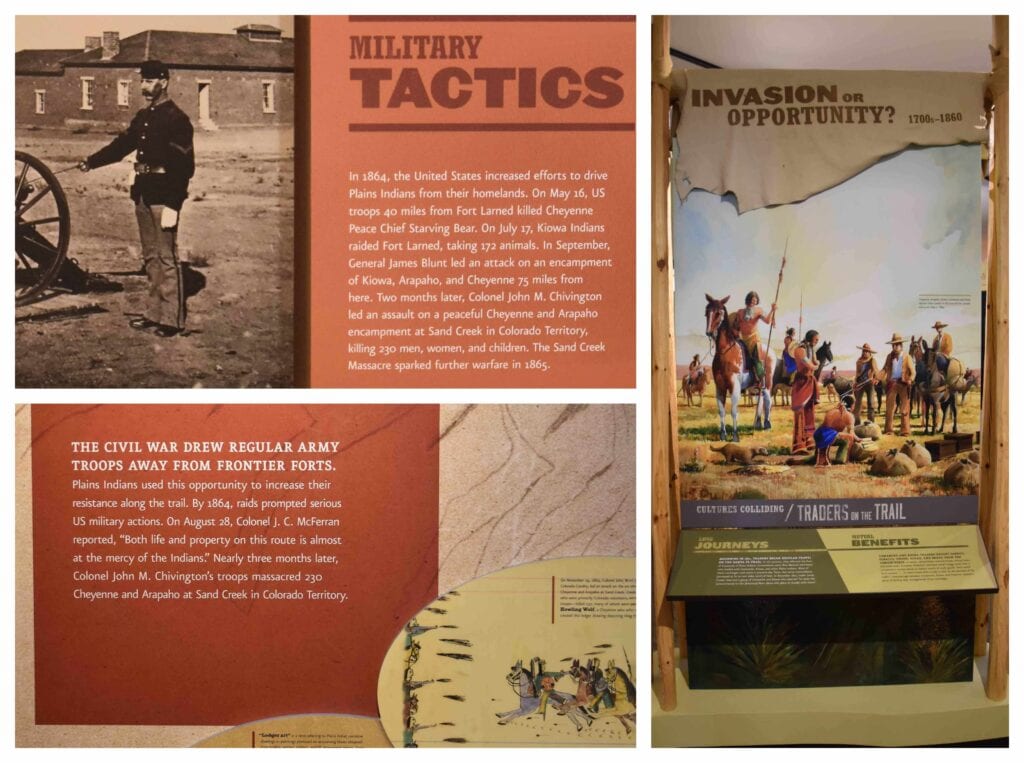
Violence Across the Plains
Relations between Indigenous tribes, settlers, traders, and the military grew increasingly tense during the mid-1800s. Expanding migration routes and broken agreements created deep mistrust throughout the region.
One of the most devastating turning points came with the Sand Creek Massacre in 1864, when Colorado militia attacked a peaceful Cheyenne and Arapaho encampment. The massacre shocked many Americans and intensified violence across the Great Plains. Fear, retaliation, and military campaigns increased throughout the following years.
Although the fort itself was not the location of the massacre, events like Sand Creek directly affected the soldiers stationed here and the broader military presence across Kansas. Interpreting this history requires acknowledging the painful realities tied to westward expansion.
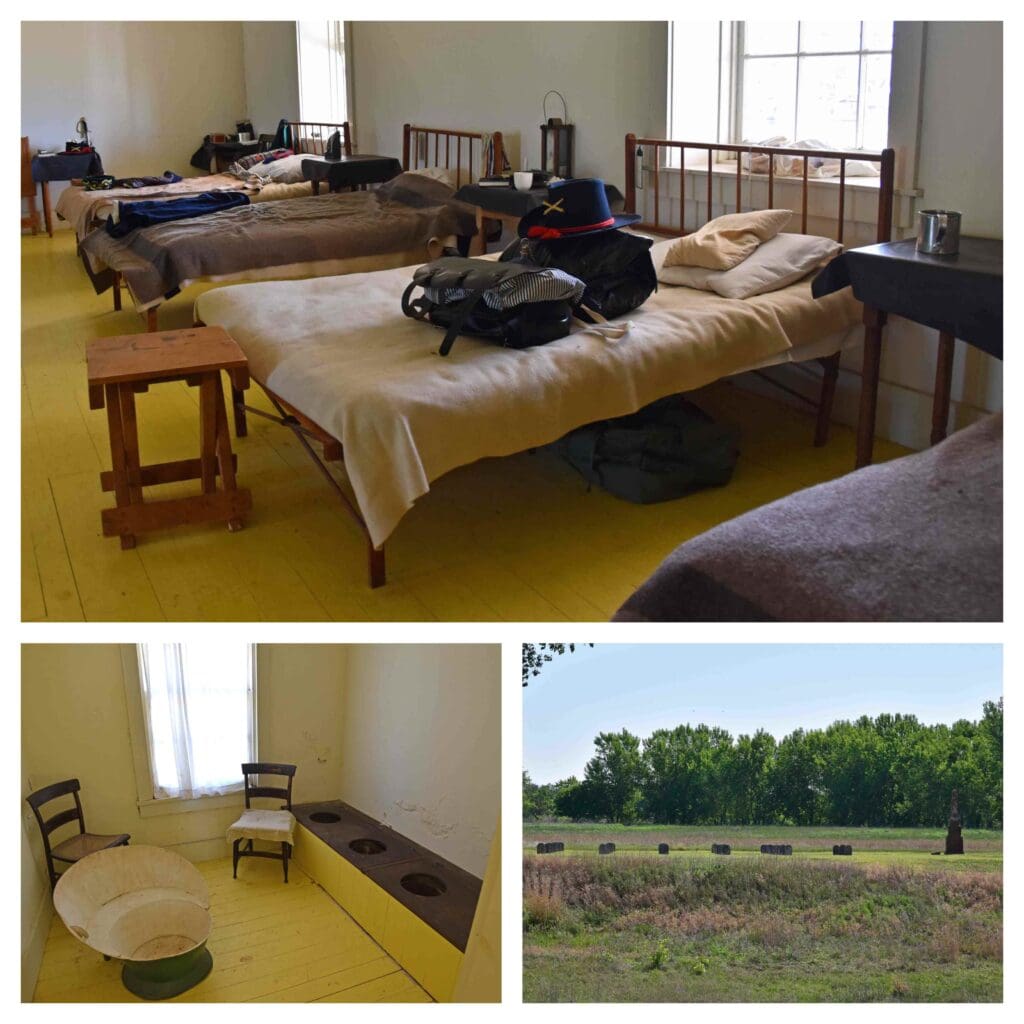
Inside the Fort Hospital
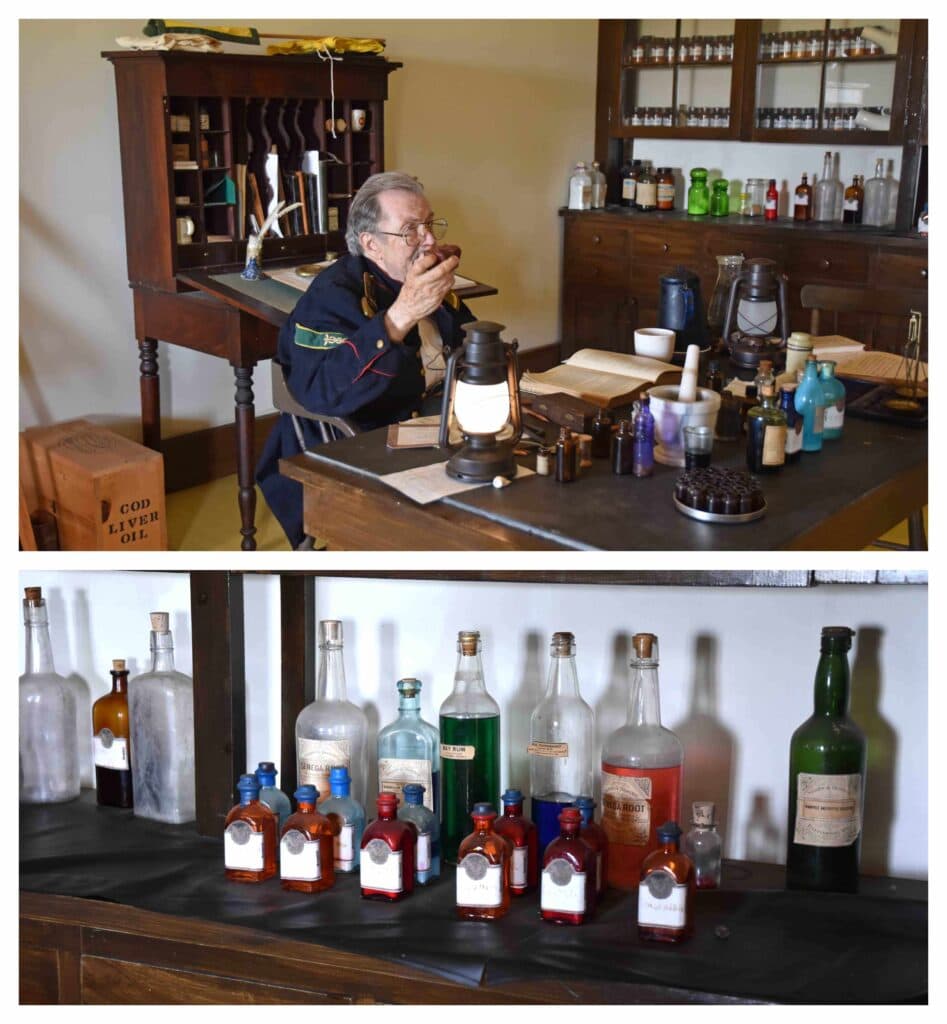
Medical care on the frontier presented enormous challenges. The post-hospital treated injuries and illnesses, and outbreaks spread quickly among soldiers living in close quarters. Doctors worked with limited supplies and knowledge compared to modern medicine.
One unusual requirement for the hospital was the inclusion of both a bathtub and an indoor latrine, features considered advanced for many frontier buildings at the time. These additions reflected growing awareness about sanitation and disease prevention within military facilities.
Nearby, a hillside graveyard overlooks the fort grounds. The cemetery serves as a sobering reminder of the dangers soldiers and civilians faced while living on the plains. Disease, accidents, and conflict claimed lives long before modern healthcare and transportation reached this isolated region.
Seeing the graveyard during Memorial Day weekend added an especially reflective atmosphere to our visit.
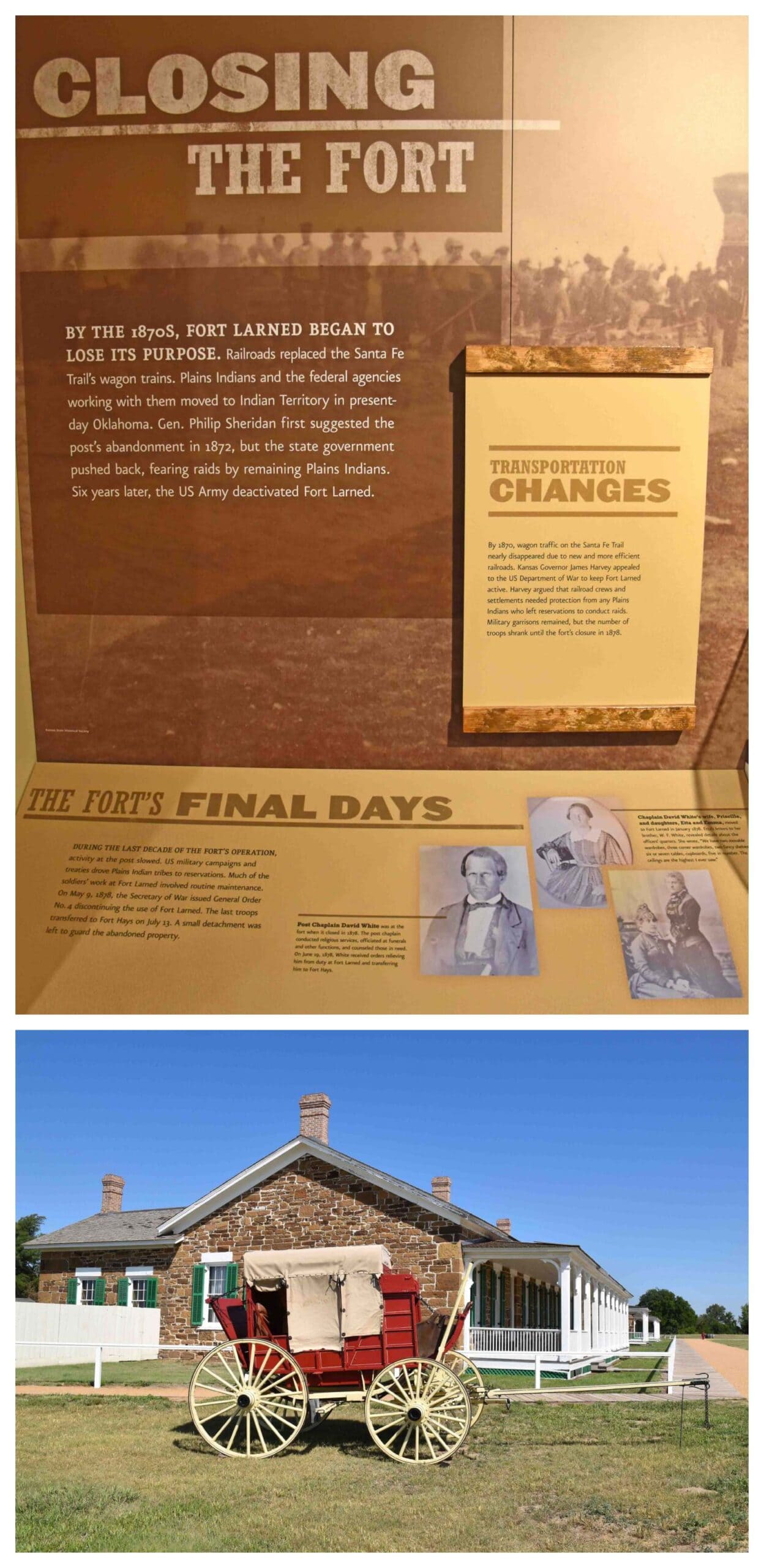
When the Frontier No Longer Needed the Fort
The importance of frontier forts began fading as railroads expanded westward during the late 1800s. Freight traffic shifted away from wagon routes, reducing the strategic importance of military protection along the Santa Fe Trail.
The Army officially abandoned the fort in 1878. Without the steady movement of wagon trains crossing the prairie, the post no longer served the same military purpose it once had. Many western forts disappeared entirely after closure, either dismantled for materials or slowly lost to time.
For a time, the land was part of a ranch. Fortunately, the durable sandstone structures were cared for long enough for preservation efforts to begin decades later. That survival allows visitors today to experience one of the clearest remaining examples of frontier military life in the American West.
Names Left Behind in Stone
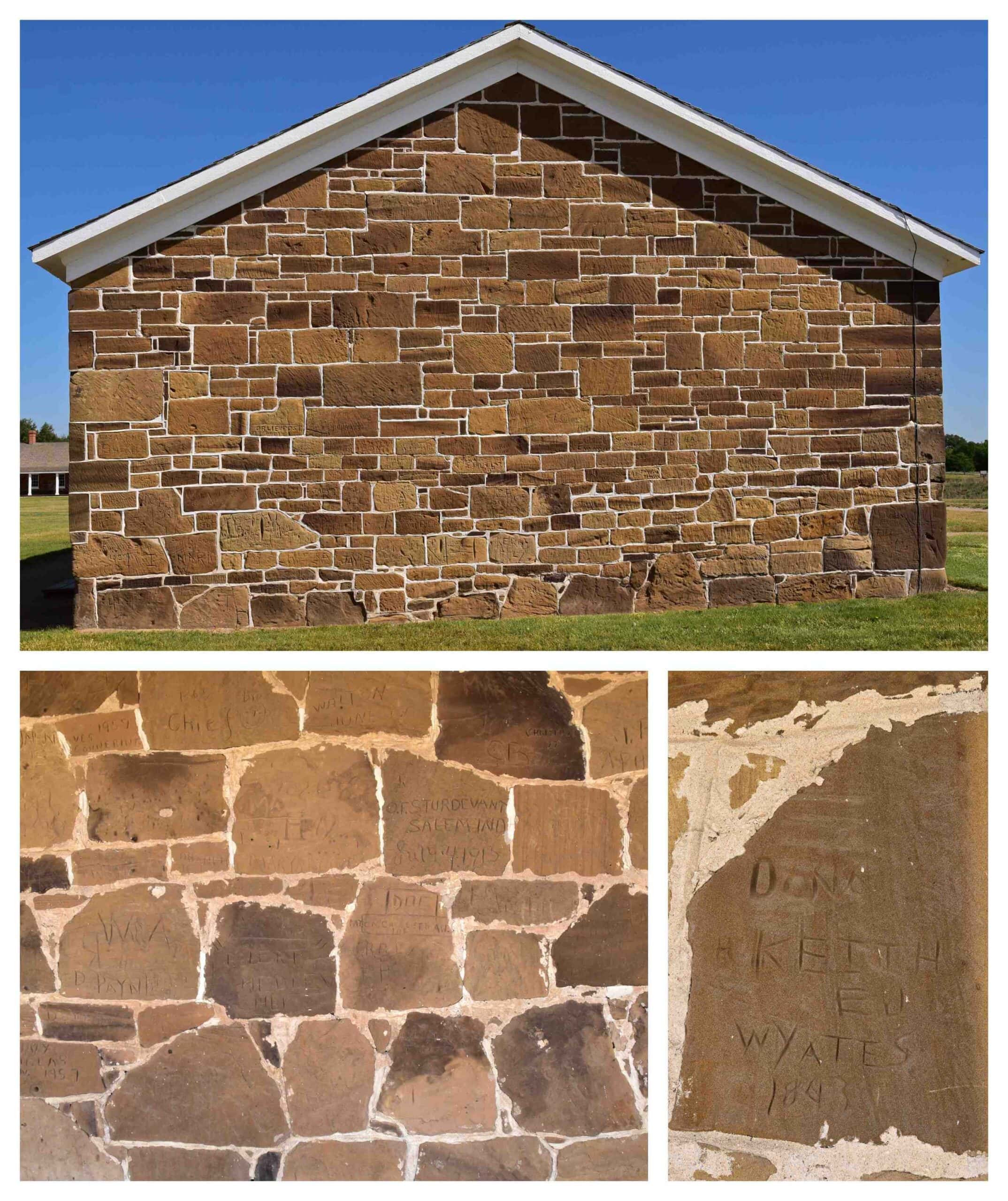
As we explored the buildings, we noticed countless names scratched into the sandstone walls. Some dated back generations, left behind by visitors who wanted to mark their connection to the site.
These carvings create an unusual tension between preservation and human curiosity. While modern visitors understand the importance of protecting historic spaces, many earlier travelers viewed these walls as a place to leave a personal mark.
When it was a ranch, visitors were encouraged to leave their mark as a form of guest registration. Some inscriptions are now historic in their own right, offering small glimpses into the people who passed through long after soldiers departed. Others serve as reminders of how fragile preservation can be when history is treated carelessly.
The markings may not have been intended as historical records, yet together they reveal how deeply this place has continued to fascinate visitors across generations.
From Forgotten Outpost to National Treasure
After years of private ownership and gradual deterioration, preservation efforts eventually helped rescue the fort from disappearing entirely. Fort Larned became a National Historic Site in 1966, allowing restoration and historical interpretation to expand significantly.
Today, visitors can tour furnished buildings, watch demonstrations, and learn through exhibits that explain the fort’s complicated history. Rangers and volunteers help transform the grounds into a much more immersive experience than a typical museum stop.
Compared to some reconstructed sites, the authenticity here feels especially striking because so many original structures remain intact. That preservation gives visitors a rare opportunity to experience the scale and atmosphere of a real frontier military post rather than a modern recreation.
Bringing History Back to Life
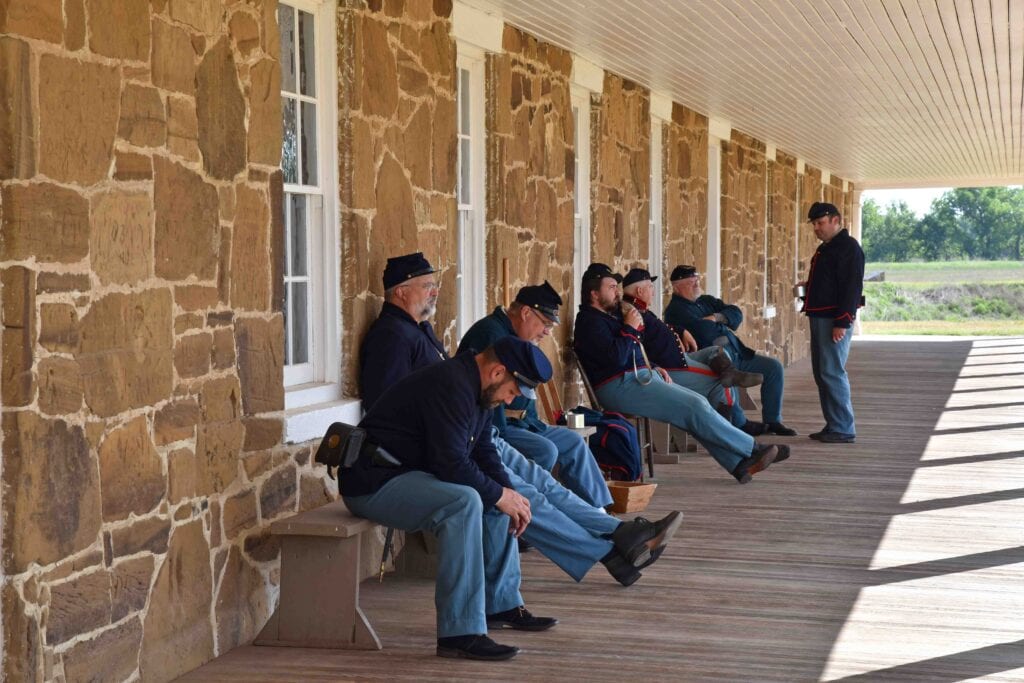
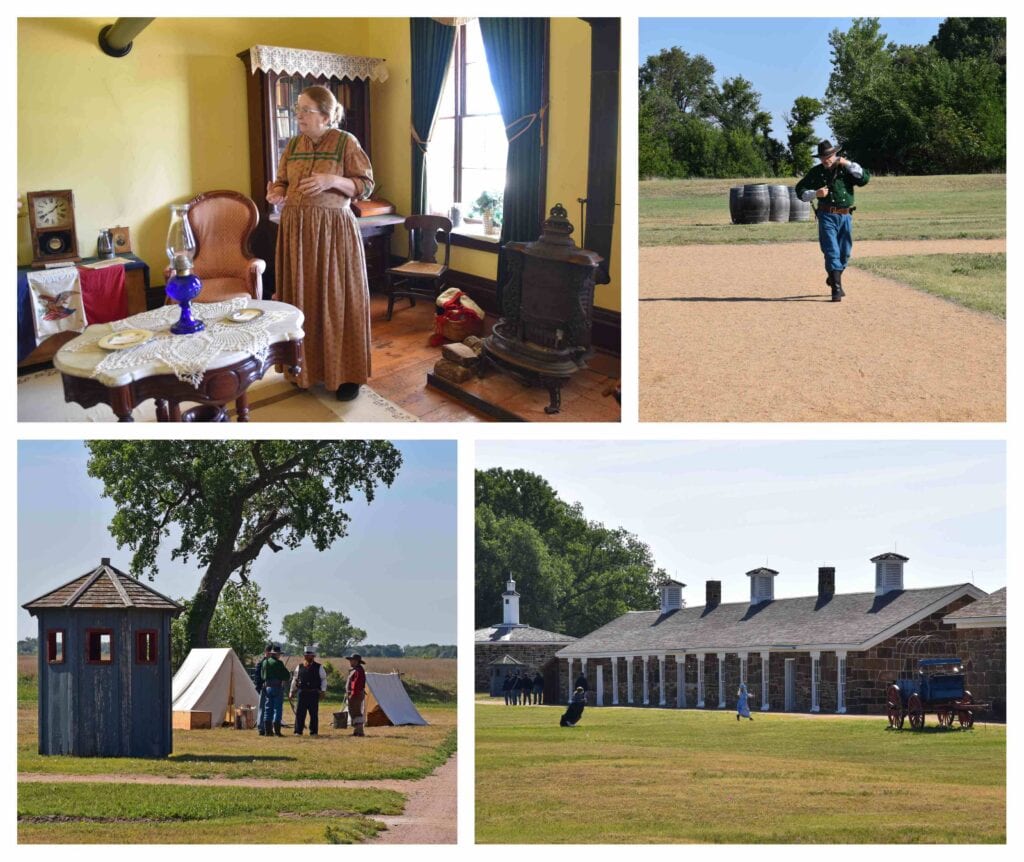
Our timing could not have been better. Memorial Day weekend activities filled the grounds with reenactors, demonstrations, and living history presentations that helped recreate the sights and sounds of the frontier era.
There were blacksmithing demonstrations, military drills, cooking displays, and cannon firings that drew everyone’s attention. Reenactors in period uniforms added movement and energy, making the buildings feel alive again.
We enjoyed interacting with interpreters who explained how soldiers and civilians adapted to daily life on the prairie. It was fascinating how quickly the fort transformed from quiet historic site into a vivid representation of frontier military operations.
The National Park Service also hosts similar special programming during Independence Day and Labor Day weekends, making those excellent times for future visits.
Why the Prairie Still Remembers Fort Larned
Some historic sites preserve buildings. Others preserve stories. Fort Larned manages to preserve both in a way that feels unusually powerful. The combination of original architecture, layered history, and immersive interpretation creates an experience that lingers long after leaving the prairie behind.
For anyone interested in military history, westward expansion, the Santa Fe Trail, or the evolving story of the American frontier, this National Historic Site deserves a place on your Kansas travel list. The preserved grounds offer an educational experience that feels deeply connected to the realities of frontier life rather than romanticized myths of the Old West.
Whether you visit during Memorial Day, Independence Day, Labor Day weekend, or a quieter time of year, the fort continues to offer an important reminder that history is rarely simple. Places like this help future generations better understand the triumphs, hardships, and consequences that shaped the American frontier.